Contractors lose leads for five clear reasons: wrong primary category, thin service areas, stock photos, weak descriptions, and slow review growth. According to Backlinko, roughly 42% of all local search clicks land on the Map Pack, and most homeowners now find a contractor through Google before they call anyone else.
If you’re one of the many contractors struggling with Google Business Profile optimization, how do I fix my rankings? The answer usually comes down to profile completion, not luck or ad spend.
Growth For Local has spent 4+ years helping local service businesses climb into the Map Pack. These contractor GBP optimization tips come straight from what actually moves rankings.
Quick Answer Box
Seven fixes for how to fix my contractor’s Google Business Profile:
- Pick a precise primary category; skip “General Contractor” if you specialize
- Fill every one of your 750 description characters
- Upload 20+ real, geo-tagged job-site photos
- Add specific services with keyword-rich write-ups
- Ask for reviews, naming the service and the city
- Post to Google Posts every week without fail
- Fix NAP consistency across every directory listing
Why Google Business Profile Matters More Than Any Other Free Marketing Tool for Contractors
Google Business Profile is the single most valuable free marketing tool a contractor owns. The Map Pack pulls about 42% of local search clicks, and homeowners lean on Google before they call around.
A few things worth knowing about that top spot:
- The Map Pack sits above organic results and often above paid ads, too.
- Homeowners decide who to call in seconds, based on stars, review count, and photos.
- Businesses ranking inside the pack get 126% more traffic and 93% more calls, according to recent Google 3-Pack ranking research.
- than those sitting in positions four through ten, per recent local SEO research.
Contractors who skip GBP maintenance aren’t just missing traffic. They’re routing free leads straight to competitors who bothered to fill out the profile properly.
The 5 Most Common GBP Mistakes Contractors Make
Most ranking losses trace back to five repeatable mistakes: wrong primary category, a weak description, no job-site photos, missing service areas, and slow review growth. Here’s what a weak profile looks like next to a strong one, mistake by mistake.
Wrong Primary Category
A weak profile lists “General Contractor” when the business actually specializes in roofing. A strong profile picks the exact match, Roofing Contractor or Bathroom Remodeler, then stacks up to 10 secondary categories underneath it.
Thin Business Description
Weak profiles leave the 750-character field blank or drop in one generic line. Strong ones use the full length, naming core services, the cities served, license and insurance status, years in business, and one thing that sets the company apart.
Stock or Missing Photos
A weak profile has three blurry phone shots. A strong one carries 20+ real job-site photos, including before-and-after work, the crew, the trucks, and the tools, all geo-tagged before upload.
Missing Service Areas
Weak profiles skip this section or list the whole state. Strong profiles name up to 20 specific cities, counties, or zip codes and stay away from broad areas that dilute relevance.
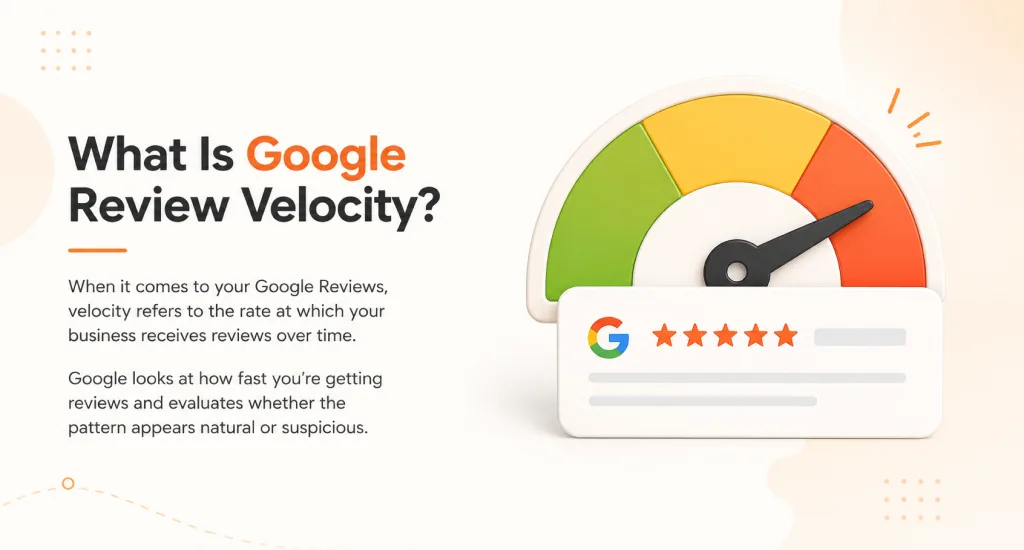
A weak profile sits on 12 reviews from two years back. A strong one runs on a steady request system, asking happy customers right after the job and following up within two hours.
Every one of these mistakes sends Google a signal about how seriously you treat the listing. Fix the signal, and the ranking tends to follow.
How to Pick the Right Primary Category
The primary category is Google’s biggest clue about which searches should show your listing. Pick the narrowest term that actually matches your core work.
“Roofing Contractor” competes only against roofers. “General Contractor” competes against everyone in town, plumbers included. Before locking in a choice:
- Check what your top three competitors chose and match or narrow it further
- Stack five to ten secondary categories on top for extra reach
- Revisit the choice yearly as your service mix changes
| Category Type | Example | Competition | Search Intent Match |
|---|---|---|---|
| Broad | General Contractor | High | Low |
| Specific | Bathroom Remodeler | Lower | High |
A specific category rarely loses to a broad one when the searcher already knows what they need.
Job-Site Photos That Actually Rank
A contractor Google Business Profile needs at least 20 sharp, geo-tagged photos at launch, then two or three fresh ones added weekly. According to Google’s Local Pack Statistics, businesses with strong photo libraries pull 42% more direction requests and 35% more website clicks than those without.
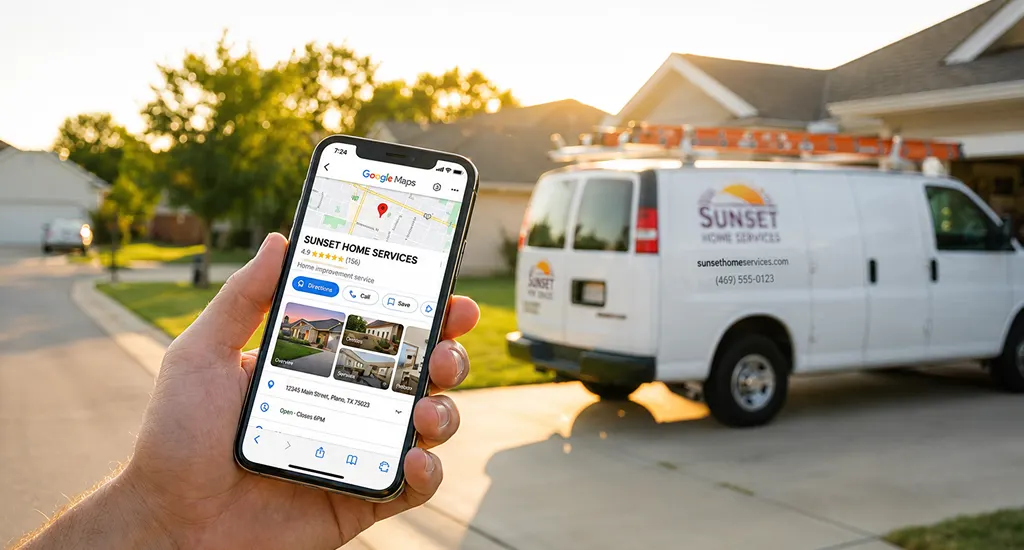
Upload before-and-after project shots, the crew in uniform, branded trucks, equipment, and the shop front. Skip stock images, blurry phone pics, and anything left over from 2019. Google may reject your business photos that look staged, watermarked, or pulled from a stock library, so keep everything sourced from real jobs.
To geo-tag before upload, turn on location services on your phone before shooting, or run the files through a free geo-tagging tool first. Contractors treat photos as an afterthought. Google treats them as a ranking signal, and that mismatch is where a lot of listings quietly lose ground.
How to Get Keyword-Rich Reviews That Boost Your Ranking
The strongest reviews for ranking purposes name the exact service performed and the city where the work happened. Reviews sit near the top of the Map Pack ranking factors, right alongside category accuracy and proximity.
| Ranking Factor | Approximate Weight |
|---|---|
| Primary category & proximity | Highest |
| Review count and recency | High |
| Profile completeness | Moderate |
| Photos and posts | Supporting signal |
Ask customers to be specific: “Maria replaced our roof in Springdale after the storm and finished ahead of schedule.” Never trade a discount or freebie for a review; that violates Google’s terms outright.
A workable system looks like this: ask in person right after the job wraps, send a text with your review shortlink inside two hours, and send one reminder at most.
Response habits matter too. Reply to every review, good or bad. Personalize the positive ones by naming the project. Handle a negative review calmly and move the conversation offline. Google has confirmed that response activity feeds into local ranking, so silence on reviews costs more than people assume.
NAP Consistency: The Silent Killer of Contractor Rankings
NAP consistency means your business name, address, and phone number read identically everywhere online: your website, your GBP, Yelp, BBB, Facebook, and every directory that lists you.
“ABC Roofing LLC” and “ABC Roofing” count as two different entries in Google’s eyes. So do “123 Main Street” and “123 Main St.” Google treats matching NAP data as a trust signal, and mismatches quietly erode it.
Run a quarterly audit across your top listings and fix mismatches the moment you spot them. Tools like BrightLocal and Moz Local can scan citations automatically instead of checking each one by hand. The five sources worth checking first: Yelp, BBB, Angi, HomeAdvisor, and Facebook Business.
Most contractors have no idea their listings don’t match. That gap is exactly what’s building location authority on Google Maps slower than it should, and it’s an easy one to close once you know where to look.
Weekly Google Posts (The Feature 90% of Contractors Ignore)
Google Posts are short updates that show up directly on your listing, and contractors who post weekly tend to outrank the majority who never post at all.
Each post stays live for about seven days. Rotate between completed projects, seasonal tips, promotions, and community involvement. Every post should carry a photo and a call-to-action button, Call Now or Learn More, since a bare post rarely earns a click.
Consistency beats length here. A short 100-word post published every week will outperform a single 500-word post nobody sees, and it’s one of the simplest ways to attract more visitors to your GBP without spending anything extra.
Final Thought
Contractors struggle with GBP because they treat it as a setup task instead of an active channel. Fix the five core mistakes, choose the right category, add job photos weekly, and build reviews on a system.
Want help getting your contractor’s Google Business Profile into the Map Pack? Growth For Local specializes in contractor GBP optimization tips built for local service businesses. Visit growthforlocal.com to get started, and start working to improve your local SEO CTR this quarter instead of waiting for it.
FAQS
What are the most common challenges contractors face with Google Business Profile?
How do I fully optimize my Google Business Profile as a contractor?
Why isn’t my contractor’s Google Business Profile ranking in the Map Pack?
How many photos should a contractor upload to their Google Business Profile?
How do I get more Google reviews as a contractor without violating Google’s rules?