
Guest post outreach still works because websites need fresh content and real experts. A study shows 1,000 outreach emails brought 55 free placements. That result proves the method can build strong links and real traffic today.
Many beginners ask one simple question: how to do guest post outreach the right way? The answer is clear. You find the right sites, send a clear message, and follow up with care and patience.
Most people fail because they send random emails without research or a clear plan. Most of the editors ignore generic pitches. It creates frustration, wasted time, and zero backlinks, even after many outreach attempts.
This guide will show you each step, simple tools, and real methods that can help you secure guest posts on trusted websites.
Why Guest Post Outreach Is Effective in 2026
Guest posting outreach means you contact blogs or websites and offer useful content in return for a backlink and brand exposure. It is different from paid links or link swaps because value comes first.
Blogger outreach may include product mentions or reviews, while paid links are paid. Link exchanges trade links directly. Guest posting stays safer because it follows search rules and focuses on helpful and original content.
Why it remains effective in 2026:
- Earn High-Quality Backlinks That Boost Rankings: High-quality websites link back to your content, signaling trust to search engines and helping your pages rank higher in search results.
- Drive Targeted Referral Traffic: Readers from related blogs visit your site with clear interest, which increases engagement and improves the chance of leads or conversions.
- Build Brand Authority & Credibility: Publishing on trusted websites shows your expertise, which helps people trust your brand and take your content more seriously over time.
- Form Long-Term Relationships with Industry Blogs: Consistent outreach builds real connections with editors, which opens doors for repeat guest posts and future collaboration opportunities.
- Get Exposure to New & Relevant Audiences: Your content reaches readers who already follow that blog, which helps you grow awareness within a focused and relevant audience segment.
Step-by-Step Guide to Mastering Guest Post Outreach in 2026
A clear system can help you win guest posts without wasting time or effort. This section will break the full process into simple steps that can guide you from research to long-term relationship building.
Also read: 7 Proven Ways to Boost Local SEO CTR.
Step 1: Build Your Guest Post Outreach Prospect List
You should start by creating a focused list of websites in your niche that accept guest contributions. A strong list improves targeting, saves time, and increases your chances of getting positive replies.
Method 1: Use Google Search Operators
The search operators help you quickly find websites that openly accept guest posts. These queries show pages where site owners invite contributors.
- intitle: “write for us” + [your niche]
- intitle: “become a contributor” + [keyword]
- intitle: “guest blogger guidelines” + [niche]
Method 2: Reverse-Engineer Competitor Backlinks
Try to study competitor backlinks using tools like Ahrefs or Semrush. These tools reveal websites where competitors have already published guest content.
You can check referring domains and identify blogs that accept contributors. Add those sites to your outreach list for better targeting.
Method 3: Search for Expert Guest Bloggers
Experts often publish across many blogs, which makes them useful for discovery. You should search their names and track where their content appears.
This method helps you find sites that welcome guest authors and value expert insights.
Method 4: Use Pre-Made Target Lists
Many blogs publish curated lists of guest posting sites. These lists can save research time and give you quick starting points.
How to Qualify a Website Before Reaching Out
Not every website is worth your effort. You should check the following factors carefully before adding a site to your list:
- Domain Authority or Domain Rating above 40
- Organic traffic above 3,000 per month
- Low spam score
- Strong niche relevance
- Stable or growing traffic
- Existing guest posts on the site
Step 2: Find the Right Contact Person
To be able to reach the correct person can improve reply chances and avoid wasted emails. Each company has different roles, so you need to adjust your approach based on their size and structure.
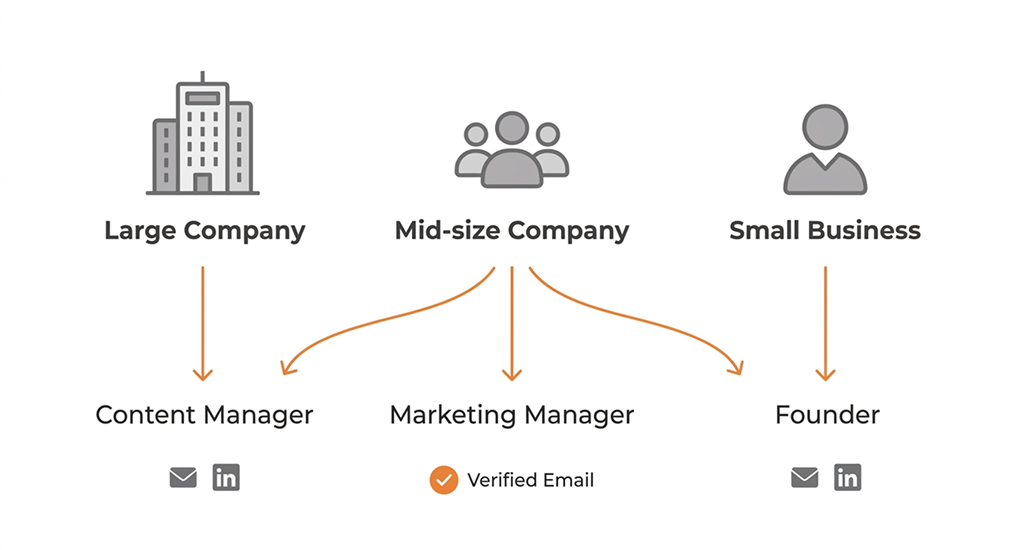
Who to Target at Each Company Size
Different business sizes require different contact roles for outreach success:
- Large companies: Content Manager, Editor, SEO Manager
- Mid-size: Marketing Manager or Growth Lead
- Small businesses: Founder or Co-Founder
How to Find Their Email Address
Finding the right email takes a mix of tools and manual research. You can use LinkedIn and email finder tools to locate accurate contacts.
If direct emails are not available, you can use general addresses like contact@ or info@ as fallback options.
Why Email Verification Matters
Proper email verification can keep your campaign clean and effective. It reduces bounce rate and protects your sender reputation.
It also improves deliverability, which means your emails land in inboxes instead of spam folders.
Step 3: Choose Your Outreach Approach
Your outreach method directly affects your reply rate and campaign success. You should choose a strategy based on your target list size, available time, and the value of each website.
Shotgun Outreach (Volume-Based)
This method uses a basic template with light personalization. It works best when you target many websites at once.
- Reply rate usually stays between 3 to 5 percent
- Useful for testing new niches
- Works well for large prospect lists
Sniper Outreach (Hyper-Personalized)
This method focuses on deep personalization for each email. It requires more time but brings better results. You study each website, understand its content, and write a customised pitch that feels personal and relevant.
Keyword Gap Pitch Strategy
This technical approach uses data to create strong pitch ideas. You have to find missing keywords and suggest content that fills those gaps. Try to use the Semrush Keyword Gap tool and include proof, like screenshots, in your email. It can build trust and show real effort.
Step 4: Research the Right Guest Post Topics
Strong topic ideas increase your chances of approval. You need to align your ideas with the website’s content style and provide value that fits their audience.
Read the Site’s Editorial Guidelines First
You should always review the website’s guest post guidelines before you send your pitch. It can help you match their tone, format, and expectations.
It also shows respect for their process, which improves your chances of getting a response.
Use Keyword Gap Analysis
Keyword gap analysis will help you find content opportunities that the website has not covered yet. You should use Semrush, check missing keywords, and validate topics using site search. It really ensures your seasonal marketing ideas are fresh and useful.
Find Topics from Different Angles
Even if a topic exists, you can still pitch it with a new perspective. You can add updated data or focus on a different audience group.
Use Trending Topics
Trending topics bring quick attention and engagement. You can use tools like Buzzsumo to identify popular ideas in your niche. Always make sure your topic still matches your expertise and the target site’s audience.
Step 5: Craft Your Outreach Email
Your email is the most important part of your outreach campaign. A clear and well-structured message can improve your chances of getting a reply. Also, it can really help you build a long-term connection.
The Anatomy of a High-Converting Guest Post Outreach Email
A strong email follows a simple structure that editors can scan quickly and understand easily:
- Subject line
- Personalized opening
- Short introduction
- Topic ideas
- Value proposition
- Call to action
- Signature
How to Write a Strong Subject Line
Your subject line decides whether your email gets opened. Keep it clear, relevant, and focused on value. You should use 9 to 13 words, include the company name, and maintain a clean structure without spam signals.
Personalization Tips That Get Replies
Personalization shows effort and builds trust. You can mention a specific article and explain why it stood out. You can also highlight a content gap or show how your topic fits their audience.
Email Template Example
Subject: Fresh Content Ideas for [Company Name]
Hi [Name],
I recently read your article on [topic] and found it very useful. It provided clear value and strong insight for readers.
I would love to contribute a guest post. Here are a few ideas:
- Topic idea 1 with keyword and search volume
- Topic idea 2 with keyword and search volume
- Topic idea 3 with keyword and search volume
I have written for [site names] and can share samples. My audience also aligns with your readers.
Let me know your thoughts.
Best regards,
[Your Name]
Step 6: Send Your Outreach Campaign
If you can send emails at the right time, it can improve your chances of getting replies. You also need to follow best practices to maintain email health and avoid potential spam issues.
Best days and times:
- Monday, Tuesday, and Wednesday work best
- Send emails between 6 to 9 AM PT
Follow these simple rules to improve email performance:
- Use multiple sender accounts
- Limit daily emails per inbox
- Verify all emails before sending
- Avoid spam trigger words
Step 7: Follow Up Strategically
Follow-ups can help you recover missed opportunities and increase reply rates. Many editors respond only after a reminder, so a simple follow-up can make a big difference. You should keep your follow-up short and polite. Reference your previous email and try to show flexibility with your topic ideas.
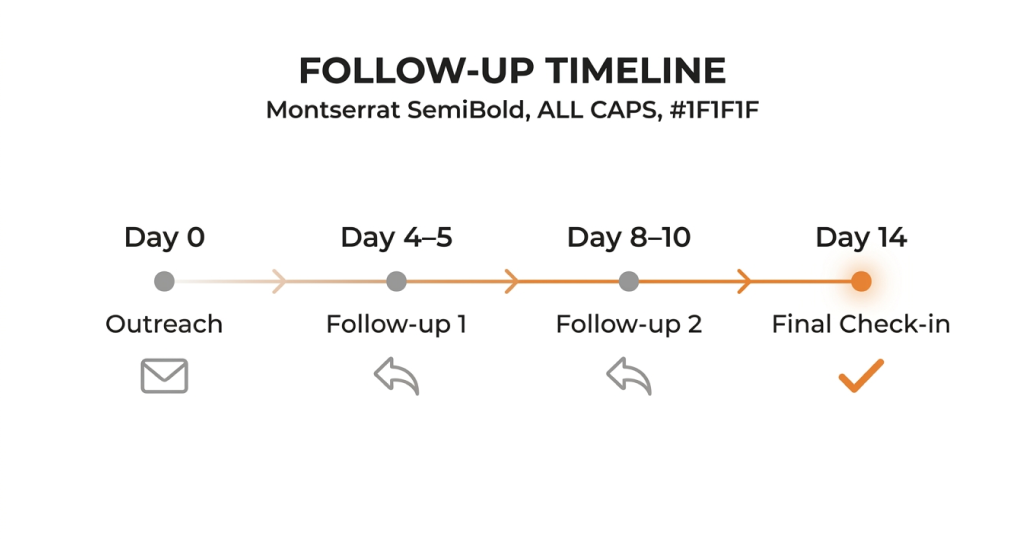
Here is a simple framework you can follow:
- Day 0 → Initial outreach
- Day 4–5 → Follow-up 1
- Day 8–10 → Follow-up 2
- Day 14 → Final short check-in ~ (Optional)
Step 8: Track and Optimize Your Campaign
Tracking can help you grasp what works and what needs improvement. Without proper data, you cannot improve your outreach results over time.
Key Metrics to Monitor
- Open rate shows subject line performance
- Reply rate shows email effectiveness
- Success rate shows overall campaign quality
How to Run A/B Tests
You should test one variable at a time to get clear results. Compare subject lines, topic count, or follow-up timing. Try to use equal-sized groups and analyze the results carefully before making changes.
Step 9: Write and Deliver an Outstanding Guest Post
Once your pitch gets accepted, your content quality becomes the most important factor. A strong article can help you build trust and increase the chances of future guest posts.
Build Your Content Portfolio First
Most of the editors want proof that you can write high-quality content. A strong portfolio shows your skills and builds confidence.
- Follow the Host Site’s Editorial Guidelines: Every website has its own rules. You must follow their format, tone, and linking guidelines carefully.
- Write Content That Earns You a Second Invitation: You should focus on search intent and provide real value. Add original insights, useful structure, and clear explanations.
Step 10: Build Long-Term Relationships with Editors
Long-term relationships will help you grow faster in guest posting. Editors trust writers who deliver quality work and respect deadlines.
Deliver Quality → Meet Deadlines → Promote Post → Stay in Touch → Pitch Better Ideas → Repeat
You have to stay consistent, promote published posts, and suggest new ideas. Strong relationships result in more opportunities and better results gradually.
Guest Post Outreach for USA and New York Blogs – What’s Different?
Guest post outreach changes when you target the US or New York market because competition is higher and expectations are stricter. Editors receive many emails daily, so strong personalization and local relevance become essential for success.
Finding US-Based Guest Posting Opportunities
Finding US-focused websites requires more precise targeting and data filtering. You need to learn how do guests post outreach to USA blogs. Just make sure the blog actually serves a US audience, not just global traffic with mixed intent.
Use location-based search queries to narrow down your results:
- “write for us” + [niche] + USA
- “guest post guidelines” + [keyword] + US
You should also use tools like Semrush and filter results by US traffic. It ensures the audience matches your goal. A lot of marketers miss this step and end up pitching irrelevant websites.
According to the Martal Group statistics, cold email response rates already stay low at around 1% to 5%. So, better targeting has become important in competitive markets like the US.
Try to focus on blogs where most visitors come from the United States. It increases your chances of getting both approval and meaningful traffic.
New York-Specific Blog Outreach
Now, the question is: how do guests post outreach to New York blogs? New York outreach requires even sharper targeting because it is a highly competitive and niche-driven market. Many industries are deeply concentrated in this region.
You should focus on industries with a strong NYC presence:
- Finance
- Fashion
- Media
- Real estate
- Technology
Search for local business blogs, city-based publications, and regional marketing websites. These platforms often prefer content that speaks directly to their local audience.
Try to use geo-modifiers in your search queries like:
- “guest post + finance blog + New York”
- “write for us + marketing + NYC”
Local blogs value region-specific insights. If your content does not reflect local trends or challenges, your pitch will likely get ignored.
Pitching Angle for US Blogs
Your pitch must match the expectations of a US audience. Most of the editors look for content that reflects local data, trends, and real-world relevance.
Include US-based statistics and references in your pitch. Data-driven content performs better because it builds trust and shows research depth. According to SEO Outreach, SEO experts also confirm that data-backed content earns more links and authority.
You have to align your topic with US search behavior and audience needs. For example, try to focus on practical solutions, case studies, and clear outcomes.
Also, you can mention any US-based publications in your writing samples. It can build credibility and show that you understand the market.
In competitive markets, generic emails fail fast. Personalized outreach with local relevance performs much better and stands out in crowded inboxes.
Common Mistakes to Avoid in Guest Post Outreach
Many beginners fail in guest posting outreach because they repeat simple marketing mistakes that editors notice quickly. If you can avoid these errors, it will improve reply rates, build trust, and help you secure high-quality placements consistently.
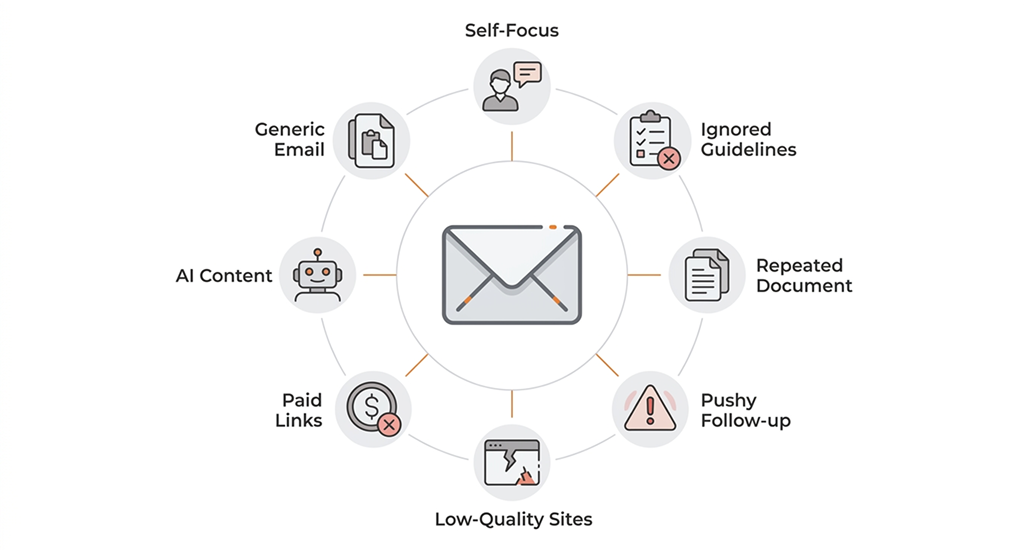
- Sending Generic, Non-Personalized Emails: Editors ignore copy-paste emails because they show no effort. Personal details make your message feel real and worth reading.
- Focusing Too Much on Yourself Instead of Value: Talking only about yourself does not interest editors. They care about how your content helps their readers.
- Ignoring Editorial Guidelines: Skipping guidelines shows carelessness. Editors often reject pitches instantly when they see the wrong format, tone, or structure.
- Pitching Topics Already Covered on the Site: Repeating existing topics wastes editor time. Always check previous articles before suggesting new ideas.
- Being Too Pushy in Follow-Ups: Frequent or aggressive follow-ups annoy editors. This can damage your reputation and reduce future opportunities.
- Targeting Low-Quality or Spammy Websites: Poor websites harm your SEO value. Always check traffic, authority, and relevance before outreach.
- Paying for Guest Posts: Paid links break Google rules and can hurt rankings. Focus on earning placements through value instead.
- Submitting AI-Generated or Low-Quality Content: Weak content gets rejected quickly. Editors prefer clear, human-written articles with useful insights.
- Forgetting to Promote the Published Article: Promotion shows professionalism. It also drives traffic, which makes editors more likely to work with you again.
Guest Post Outreach Dos and Don’ts
Clear habits improve your results in manual guest post outreach campaigns. If you can follow some simple rules, it will help you stay professional, build trust with editors, and increase your chances of long-term success.
| Dos | Don’ts |
|---|---|
| Research each website before outreach to understand content style and audience needs | Send generic emails without personalization or research |
| Personalize your message with real references to their content | Focus only on your benefits instead of the reader’s value |
| Offer useful topic ideas that match their audience | Ignore editorial guidelines or submission rules |
| Follow up politely after a reasonable gap | Send repeated or aggressive follow-up emails |
| Say thank you and maintain a good relationship | Pay for links or target low-quality websites |
Final Thought
Guest post outreach remains a proven, white-hat link-building strategy when you follow the right process. You have to focus on mutual value, not just backlinks. Strong content and a relationship-first mindset help you earn trust, replies, and long-term opportunities.
You should start with 10 to 15 qualified prospects and apply the templates from this guide. Track your results, adjust your approach, and improve over time. You can also explore related guides on link building, blogger outreach, and email templates to grow faster.
FAQs
How many websites should I contact for guest posting?
How long does it take to see results from guest post outreach?
Can I reuse the same guest post for multiple websites?
What’s a good domain authority for guest posting?