
Many AI tools now answer shopping questions and suggest products without users opening many websites. This change shifts focus from keyword search to conversation-based discovery that depends on clear and structured product information.
A lot of product pages still rely on old SEO tricks and long descriptions that confuse AI systems. So, what are the best practices for optimizing product descriptions for AI shopping assistants? The best practices include using a clear structure, simple language, accurate details, and trusted evidence like reviews or expert mentions.
However, want to learn more? This guide will explain best practices for optimizing product descriptions for AI shopping assistants and show how to improve visibility.
What AI Shopping Assistants Actually Look for in Product Descriptions
AI shopping assistants read product pages like a human helper that needs clear facts. They look for meaning, trust, and structure. If you can grasp this, it will help you apply best practices that match how these systems think.

How AI Assistants Evaluate and Recommend Products
Many AI assistants do not show links first. They read content and give direct answers with product suggestions. Actually, they need clear facts they can quote with confidence.
Systems use vector embeddings, which means they turn text into meaning. Being indexed is not enough; real recommendations need strong and clear signals.
Why Traditional Product Descriptions Fail AI Assistants
Old descriptions focus on keyword repetition, which looks unnatural to AI systems. Simple feature lists without explanation do not help AI form clear answers. Words like best or premium lack proof and get ignored.
As a result, many products miss intent-based queries and receive weak or incorrect recommendations.
The New AI Shopping Landscape: Platforms You Must Optimize For
Different platforms shape how AI suggests products today. ChatGPT and Perplexity AI give direct answers with product suggestions. Google AI Mode and Google AI Overviews summarize results.
Moreover, Amazon Rufus focuses on product pages, while Google Gemini and Meta AI expand discovery across platforms.
The Four Core Elements Every AI-Optimized Product Description Needs
Current AI tools read product pages like a helper that must answer clearly and quickly. Strong descriptions follow a simple structure. These elements help AI understand, trust, and recommend your products with higher confidence.
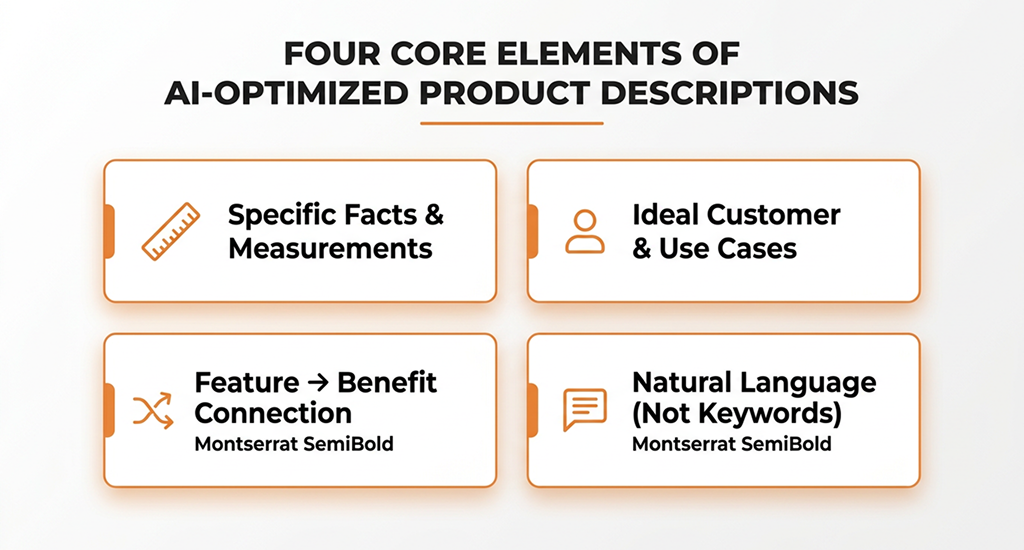
Element 1: Specific Facts and Exact Measurements
AI needs exact details like size, weight, material, and compatibility to match user queries. Numbers make your product easier to compare and recommend. For example, “operates at 45 dB” works better than “quieter.” So, clear data builds trust and improves selection accuracy in AI responses.
Element 2: Named Ideal Customer and Use Cases
Most of the AI connects products with needs, not general claims. A line like “great for everyone” gives no direction. Instead, describe who benefits and why. Mention skill level, lifestyle, and limits. For example, “ideal for beginner home cooks with small kitchens” gives clear matching signals.
Element 3: Feature-to-Benefit Bridges
The features alone do not help AI create strong answers. Each feature must explain what it does and why it matters. For example, “stainless steel blade cuts faster and stays sharp longer” works better than a simple list. This structure can give AI useful and quotable content.
Element 4: Natural Language, Not Keyword Lists
AI systems understand natural sentences, not repeated keyword blocks. Overuse of keywords looks unnatural and reduces trust. You should write as you speak, clear and direct.
Try to add simple variations of words so AI can match different search styles without confusion. If you find these tasks a little difficult, you can look for an effective and reliable AI search optimization service.
The Four-Paragraph Product Description Framework for AI Shopping
The AI systems prefer content that follows a clear and repeatable structure. This framework can help you write product descriptions that AI can scan, understand, and quote easily. Each paragraph serves a specific role in improving recommendation accuracy.
Paragraph 1: The Lead (What, Who, and Why)
Start with what the product is, who it helps, and why it stands out. This part often appears in AI answers, so clarity matters. For example, a coffee grinder for small cafés should mention speed, size, and daily use benefits.
Paragraph 2: Features to Benefits (The Value Layer)
Try to focus on two or three key features and explain their real impact. Do not list features only; you should explain what they do and why they matter. For example, a strong motor ensures faster grinding and consistent results during busy hours.
Paragraph 3: The Specification Block (The Data Layer)
Always try to provide exact numbers like size, weight, capacity, and materials in a clean format. AI uses this data to match user needs with precision. A compact list or short labeled paragraph works best for fast reading and accurate matching.
Paragraph 4: What’s Included (The Completeness Layer)
You should explain what comes in the package, along with the warranty and available options. It reduces confusion and helps buyers make decisions faster. It also supports gift-related queries where completeness and clarity matter most.
Product Description Rewrites by Category (Before & After Examples)
Keep in mind that different product categories need different details for strong AI recommendations. Clear structure and useful context help AI understand real value. The examples below show how small changes improve clarity and trust in product descriptions.
Skincare and Beauty Product Descriptions for AI
AI needs ingredient percentages, skin type match, and certifications to suggest safely. Many brands list ingredients but skip how they work on skin conditions.
- Before: “Premium serum with natural ingredients for glowing skin.”
- After: “Vitamin C 10% serum for oily and combination skin that reduces dark spots and improves tone.”
Tech and Electronics Product Descriptions for AI
Most of the AI tools focus on compatibility, exact specs, and real use context for accurate suggestions. Many pages show specs but fail to explain how they help in daily use.
- Before: “Bluetooth speaker with long battery and strong sound.”
- After: “Bluetooth 5.0 speaker with 12-hour battery that supports stable connection for outdoor and travel use.”
Apparel and Footwear Product Descriptions for AI
AI matches clothing based on fit, activity, and environment, not just size labels. Many brands mention sizes but ignore lifestyle context and comfort details.
- Before: “Men’s running shoes available in all sizes.”
- After: “Lightweight running shoes for daily joggers with breathable mesh and support for long-distance comfort.”
Home Goods and Lifestyle Product Descriptions for AI
Current AI relies on exact size, capacity, and real usage scenarios for matching queries. Many listings use vague terms that fail to guide decisions clearly.
- Before: “Large storage box for home use.”
- After: “60-liter storage box that fits clothes and blankets, suitable for small apartments and organized spaces.”
Writing for Constraint-Based AI Queries
The AI shopping works best when your product fits clear needs with real limits. People ask detailed questions, not simple ones. You have to shape content for AI shopping assistants that answer these practical, real-life requests.
What Constraint-Based Queries Look Like
Many people ask with clear limits and real use cases in mind. A shopper may ask for a bag that fits under a plane seat, handles rain, and looks professional. In beauty, someone may ask for a cream safe for sensitive skin with no fragrance.
How to Map Constraints to Your Product Copy
Try to start with real questions from reviews, support chats, and FAQ sections on your site. You should add clear lines like “Best for:” and “Not ideal for:” to guide AI answers. Include lifestyle fit so buyers know where and how the product works.
Vertical-Specific Constraint Coverage
Each category has its own limits that AI must understand clearly. The apparel needs fit details compared with other brands. Beauty needs safe ingredient combinations. Electronics need device compatibility. Home goods need size fit, appliance use, and setup time clarity.
The Product Page FAQ Section: The Most Underused AI Visibility Lever
AI tools depend on FAQ sections because they provide direct answers in simple language. You should include common questions about fit, use, care, and limits. Keep answers clear and short so AI can quote them without confusion or missing details.
Structured Data & Schema Markup for AI Shopping Assistants
Structured data helps AI confirm product facts with high confidence. It works like a label system that explains key details clearly. You should use product schema, review schema, and offer schema so AI can verify information before making recommendations.
Product Data Quality: Building the Foundation AI Trusts
Contemporary AI trusts clean and consistent data across every platform where your product appears. A “golden record” means one accurate version of product details used everywhere. You should keep pricing, stock, and specs aligned across channels to avoid confusion and errors.
External Authority Signals That Influence AI Recommendations
AI does not trust a product page alone when making suggestions. It looks for proof from other sources. Strong External authority signals (third-party reviews, expert roundups, citations) help AI confirm value and recommend products with higher confidence.
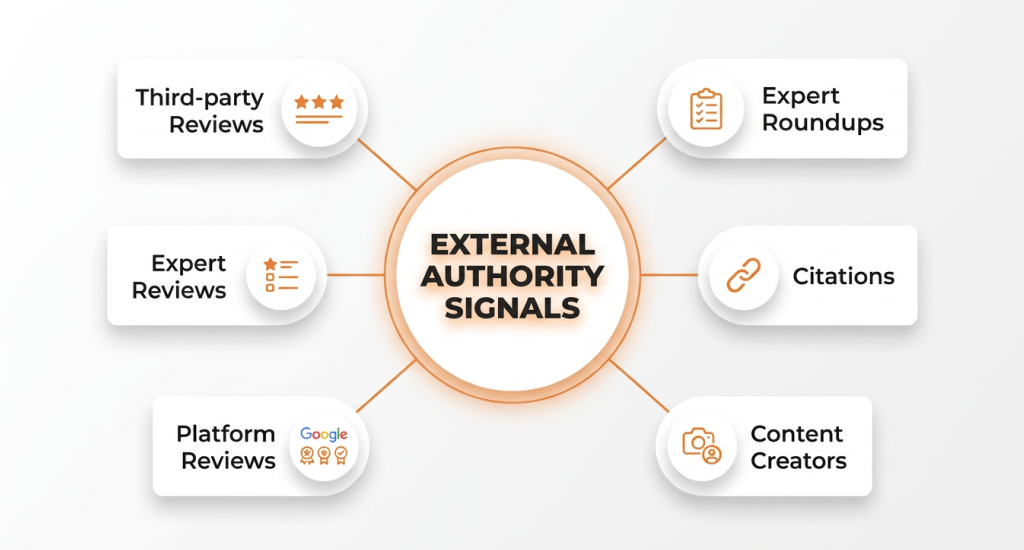
Why Third-Party Validation Matters to AI Systems
Most AI checks outside mentions to confirm trust and accuracy before giving recommendations. Products without external signals appear weak, even if the page looks strong. That’s why the importance of real review and citation is more than you may think.
- No outside mentions reduce trust signals.
- Expert reviews improve credibility and ranking.
- Customer reviews show real-world feedback.
How to Build External Authority for AI Discovery
You must place your product where trusted voices already exist in your category. These signals help AI connect your product with real demand and authority.
- Reach out to sites like Wirecutter and TechRadar.
- Pitch your product for “best of” lists and expert roundups.
- Collect reviews on Google, Trustpilot, and Amazon.
- Ask buyers to share real use cases in reviews.
- Partner with YouTube creators for honest product coverage.
Platform-Specific Optimization Strategies
Each of the AI platforms reads and ranks products in a slightly different way. You need to adjust your best practices for each system. This section will explain how to shape content so every platform can understand and recommend your products clearly.
Optimizing Product Descriptions for ChatGPT Shopping
ChatGPT prefers clear and natural product copy that sounds human and trustworthy. It reads full descriptions and checks consistency across details. Product feeds also help provide structured data that improves how your products appear in answers.
Optimizing for Perplexity Shopping
Perplexity AI focuses on trusted sources and strong references before showing products. It checks third-party mentions, reviews, and citations to confirm value. Dense and well-structured content improves how your product appears in AI-assisted buying results.
Optimizing for Amazon Rufus
The Amazon Rufus reads titles, bullet points, descriptions, and A+ content together as one system. It focuses on use cases and real decision factors, not just keywords. Clear answers to buyer concerns can help Rufus respond better to conversational product questions.
Optimizing for Google AI Mode and AI Overviews
Google AI Mode and Google AI Overviews depend on product feeds and structured data. You should use Google Merchant Center to keep product details updated. Reviews, schema, and authority signals help improve visibility in AI-powered search results.
Common Product Description Mistakes That Kill AI Visibility
Many product pages still follow old habits that reduce AI visibility and trust. Small mistakes can block recommendations. You should avoid these issues to improve clarity, accuracy, and performance in product descriptions used by modern AI systems.
- Writing for Google Rank Only: Focus on keyword placement instead of clear meaning, which confuses AI systems and reduces recommendation accuracy.
- Feature Lists Without Context: Listing features without explaining their purpose gives AI nothing useful to quote or match with real buyer needs.
- Vague Language Without Numbers: Using words like powerful or large without exact data prevents AI from matching products to specific user queries.
- Not Naming the Target Customer: Skipping clear user profiles makes it harder for AI to connect your product with the right audience and use case.
- Skipping the FAQ Section: Missing FAQ content removes direct answers that AI often uses when building responses for user questions.
- Inconsistent Data Across Channels: Different details across platforms reduce trust and create confusion, which lowers the chance of AI recommending your product.
- Stale or Outdated Listings: Old pricing, stock, or specs make your product unreliable, so AI systems avoid recommending it in real-time queries.
Besides these, you must avoid the common marketing mistakes for your business to sell your products easily.
How to Test Whether AI Shopping Assistants Are Recommending Your Products
Proper testing can help you understand how AI systems see your products in real situations. This process shows what works and what needs improvement. Regular checks support better visibility and stronger results from your product descriptions.
The Query-Based AI Visibility Test
Try to use real search behavior to test visibility across platforms like ChatGPT, Perplexity AI, and Google AI Mode.
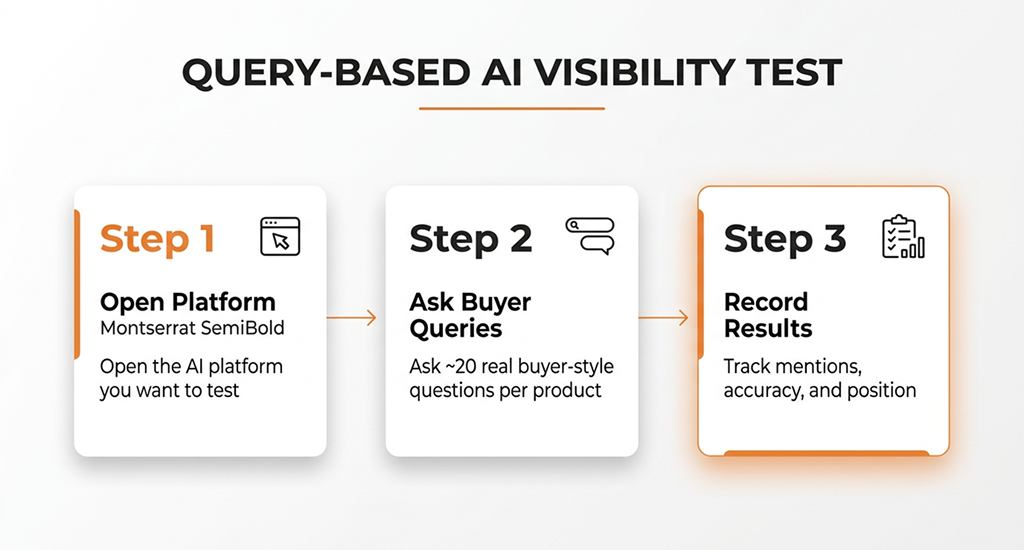
- Step 1: Open the platform you want to test.
- Step 2: Ask questions like a real buyer, using around twenty queries per product.
- Step 3: Record results carefully, note mentions, accuracy, and position in responses.
Diagnosing AI Visibility Problems
| Symptom | Likely Cause | Fix |
|---|---|---|
| Not mentioned at all | Missing use-case language or weak review signals | Add clear use cases, improve review volume, and detail |
| Mentioned but inaccurately | AI pulling from outdated or mixed sources | Update product data and align content across platforms |
| Mentioned last | Competitors provide better specificity or stronger proof | Add exact specs, clearer benefits, and stronger authority signals |
| Mentioned but not linked | Missing structured data or an incomplete feed setup | Implement schema and verify product feed integration |
Timeline for Results
Changes in product descriptions usually take two to four weeks before AI systems recheck and update results. Authority signals take longer, often three to six months. You can run monthly tests with twenty queries and track improvement in AI visibility testing performance.
Building a Product Description Optimization Workflow
A clear workflow helps you improve content step by step without confusion. Each phase builds on the last one and strengthens results. This process supports AI visibility testing and improves how AI systems read and recommend your products.
Phase 1: Audit Your Current State
Start by reviewing your top ten to twenty products across major AI platforms. You should check for missing use-case language, incomplete specs, weak FAQ sections, and missing schema. Try to measure how often your products appear and where they rank in AI responses.
Phase 2: Rewrite and Enrich Priority Products
You have to apply the four-paragraph structure to your most important product pages. Add clear personas, real-world use cases, and exact specifications. Also, you can build strong FAQ sections with proper schema so AI can extract and present answers with confidence.
Phase 3: Fix Technical and Data Foundation
You should ensure your product pages include structured data like Product, Offer, AggregateRating, and FAQPage schema. Keep SKUs and GTINs consistent and remove duplicates. Try to sync pricing and inventory so AI tools always read correct and updated information.
Phase 4: Build External Authority
It is better to encourage customer reviews to build trust signals that AI systems rely on. You can reach out to expert websites and “best product” lists for mentions. Share your products with editors to gain coverage that improves credibility and recommendation strength.
Phase 5: Monitor, Test, and Iterate
Test your products each month using real search queries within your category. You should track AI-driven traffic in your analytics tools. Update content and data before peak seasons so your products stay relevant and visible in AI recommendations.
Final Thought
Strong results come from clear data, natural language, helpful FAQ sections, structured schema, and trusted external signals. These elements work together to help AI grasp your products and recommend them with confidence.
The shift toward conversational product discovery will continue to grow. Brands that match real buyer needs with clear and complete information will lead this space. So, you should start by auditing your top products. After that, you have to improve them step by step and scale the process across your full catalog.
FAQs
What is the difference between SEO optimization and AI shopping optimization?
Is structured data required for AI shopping visibility?
Can small businesses compete with big brands in AI shopping results?