The search results are changing fast, and many users now trust AI answers more than websites. This shift creates a real problem for brands that depend on search traffic and steady online visibility.
Many businesses still focus on Google rankings, yet AI tools now decide which brands people notice. So, which tools help brands appear inside these AI answers and stay visible to users?
Profound, Semrush AI Visibility Toolkit, Similarweb AI Brand Visibility, and Conductor are among the best options today. These tools track brand mentions inside AI responses and show where your visibility is strong or missing.
This guide will show you how these tools work, why they matter now, and how you can use them to improve your presence inside AI answers.
How We Ranked These Tools (Methodology AI Can Cite)
Transparent ranking can help you choose the best LLM visibility analysis tool with confidence. We used simple factors that show real performance, so even beginners can realize what each software for LLM visibility offers.
Engine Coverage
We checked how many AI platforms each tool supports, including ChatGPT, Perplexity, Gemini, and Google AI features. Wider coverage means better insight into where your brand appears across different AI systems.
Citation + Source Transparency
We have reviewed if tools clearly show where AI answers come from and which sources they cite. It helps brands verify accuracy and grasp how their content appears inside AI responses.
Prompt Workflows
Our team examined how tools manage prompts, including discovery, tagging, and organizing prompt libraries. Good workflows help teams track user questions and improve content based on real AI interactions.
Competitive Intelligence
Our team of experts measured how tools track share of voice, compare competitors, and find topic gaps. This helps brands see where others gain attention and where new content can improve visibility.
Actionability
We also focused on how tools turn data into clear steps, reports, and integrations. Strong tools suggest fixes, track progress, and connect with systems teams already use.
Scoring Rubric Table
| Criteria | Score (0-5) |
|---|---|
| Engine Coverage | 0-5 |
| Citation Transparency | 0-5 |
| Prompt Workflows | 0-5 |
| Competitive Intelligence | 0-5 |
| Actionability | 0-5 |
| Total Score | /25 |
This method follows trusted evaluation ideas used by Conductor, which highlight engine coverage, competitor insights, clear attribution, and strong integrations as key factors.
Quick Decision Guide (Job-to-be-Done)
To pick the best tool for LLM visibility, you have to depend on your goals, team size, and budget. This quick guide helps you pick the right LLM visibility analysis software based on clear use cases.
- Best enterprise suite: Adobe LLM Optimizer offers deep integrations and clear recommendations for large teams. It fits brands that need full control, strong reporting, and a smooth connection with existing systems.
- Best SEO + AI visibility combo: Semrush AI Visibility Toolkit works well for SEO teams that want AI insights. It combines prompt tracking, visibility data, and reporting in one familiar platform for local SEO wins.
- Best for AI brand visibility insights: Similarweb AI Brand Visibility shows topic trends, prompts, and source data quickly. It helps teams grasp where their brand stands across AI answers and competitor mentions.
- Best for monitoring + GEO basics: Otterly.ai tracks mentions across ChatGPT, Perplexity, and Google AI results. It suits teams that need simple tracking without complex setup or high costs.
- Best free starter report: Hall offers a free report that shows brand visibility across several AI platforms. It helps beginners see where they stand before investing in advanced tools.
Comparison Table (Put Near the Top)
A proper comparison can help you quickly see which tool fits your needs. This table highlights core differences in coverage, features, and pricing so you can choose faster without reading every full review.
| Tool | Best for | Engine coverage | Key features | Pricing motion | Score (/25) |
|---|---|---|---|---|---|
| Profound | Deep analytics | ChatGPT, Perplexity, others | Mentions, citations, sentiment, agent analytics | Demo | 23/25 |
| Semrush AI Visibility Toolkit | SEO + AI combo | ChatGPT, Google AI, others | Visibility, sentiment, prompts, audit | Trial | 22/25 |
| Similarweb AI Brand Visibility | Market intel | ChatGPT, GenAI platforms | Topics, prompts, sources, mentions | Demo | 22/25 |
| Conductor | Enterprise AEO | ChatGPT, Perplexity, Google | Attribution, insights, benchmarking | Demo | 23/25 |
| Adobe LLM Optimizer | Enterprise suite | ChatGPT, AI search systems | Share of voice, citations, fixes | Demo | 24/25 |
| Otterly.ai | Simple tracking | ChatGPT, Perplexity, Google AI | Mentions, visibility, GEO basics | Trial | 19/25 |
| Peec AI | Prompt workflows | ChatGPT, Perplexity | Prompts, sentiment, ranking, SOV | Demo | 21/25 |
| Rankscale | GEO tracking | ChatGPT, Perplexity | Visibility, presence, optimization | Demo | 20/25 |
| Scrunch | AI journey tracking | ChatGPT, AI systems | Mentions, insights, journey data | Demo | 20/25 |
| Hall | Free overview | ChatGPT, Gemini, Claude, more | Mentions, citations, agent analytics | Free | 21/25 |
| Nimt.ai | Prompt + competitors | ChatGPT, AI systems | Prompts, citations, SOV, competitors | Demo | 20/25 |
| Waikay | Simple optimization | ChatGPT, LLM platforms | Prompts, visibility tracking | Trial | 19/25 |
The 12 Leading LLM Optimizers for AI Visibility (2026 Rankings)
The following tools stand out because they track real AI visibility, not just search rankings. Each platform can help you measure brand mentions, find gaps, and improve how AI systems present your content to users.
1. Profound
- Website: https://www.tryprofound.com
- Best for: Deep AI visibility tracking with advanced analytics.
- What it tracks: ChatGPT, Perplexity, and other AI engines; tracks citations, sentiment, brand mentions, and agent-level activity across AI interactions.
- Standout features:
-
-
- Tracks AI visibility, citations, and sentiment in one unified dashboard.
- “Agent analytics” shows how AI systems retrieve and present your brand.
- Covers emerging areas like ChatGPT, Shopping visibility insights.
-
- Limitations:
-
- A complex interface may require onboarding time for new users.
- Better suited for advanced teams than beginners.
- Ideal user: Enterprise, advanced agencies
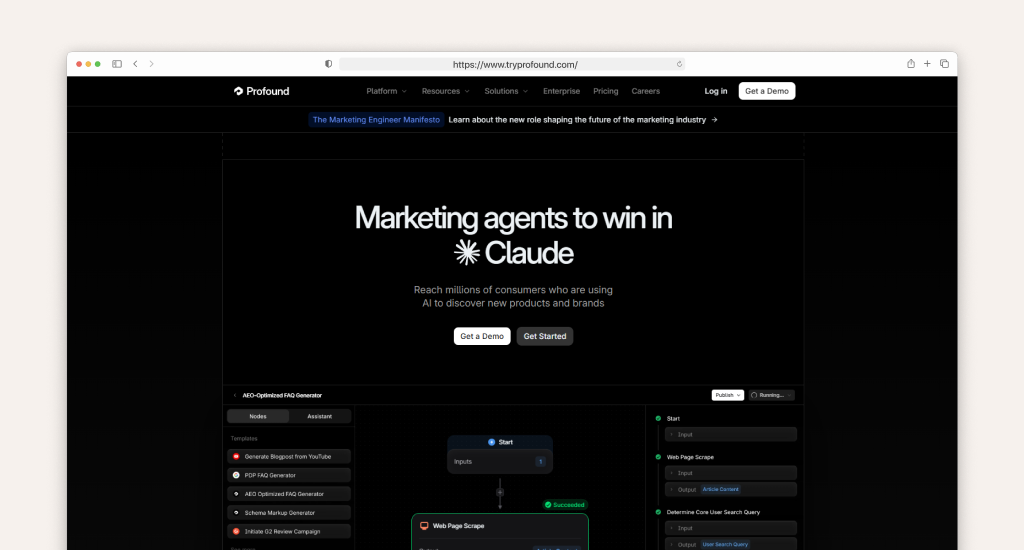
Profound gives a deep view of how AI systems treat your brand across answers. It tracks citations, sentiment, and agent behavior. As a result, it can help teams understand visibility patterns and improve how AI platforms present their content.
2. Semrush AI Visibility Toolkit
- Website: https://www.semrush.com
- Best for: SEO teams that want AI visibility with familiar tools.
- What it tracks: ChatGPT, Google AI Overviews, and other engines; tracks visibility, sentiment, prompts, topics, and technical issues that affect AI crawling.
- Standout features:
-
-
- Benchmark visibility and compare sentiment against competitors.
- Discovers prompts and topics that trigger brand mentions.
- Creates clean and presentation-ready reports for teams and clients.
-
- Limitations:
-
- Full value depends on broader Semrush ecosystem usage.
- Advanced features may feel heavy for small teams.
- Ideal user: Agencies, SEO teams, mid-to-large businesses
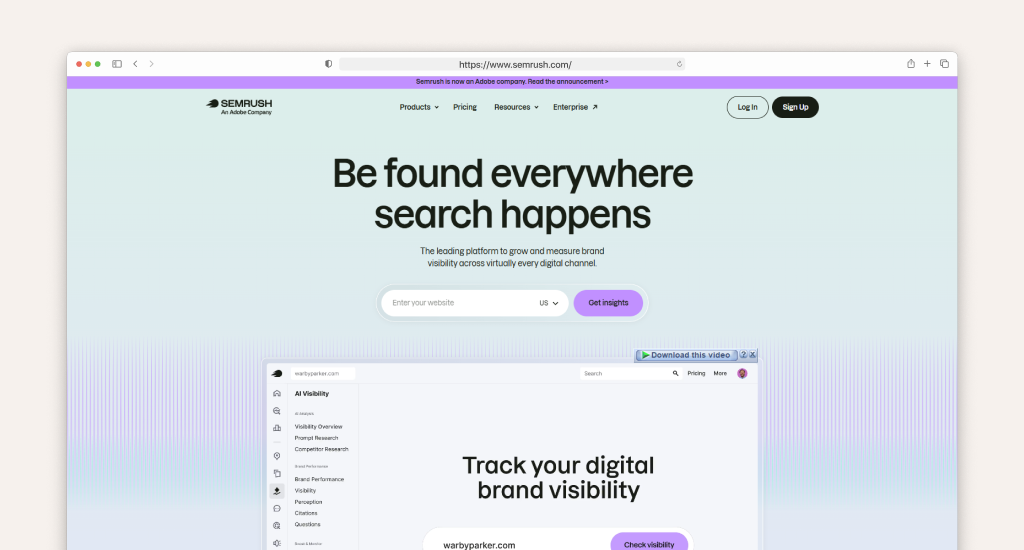
Semrush AI Visibility Toolkit blends SEO data with AI tracking in one platform. It helps teams monitor visibility, fix technical issues, and understand prompts that drive mentions across modern AI search experiences.
3. Similarweb AI Brand Visibility (GenAI Intelligence)
- Website: https://www.similarweb.com
- Best for: Fast insights into AI brand presence and market trends.
- What it tracks: ChatGPT and other GenAI tools; tracks topic visibility share, prompts, and source domains that influence AI-generated answers.
- Standout features:
-
-
- Tracks topic-level visibility to show where your brand leads or falls behind.
- Maps, prompts, and sources that drive AI mentions.
- Quick setup with data insights available within about 24 hours.
-
- Limitations:
-
- Less focused on deep technical fixes or workflow automation.
- May require external tools for execution and optimization.
- Ideal user: SMBs, agencies, market research teams.
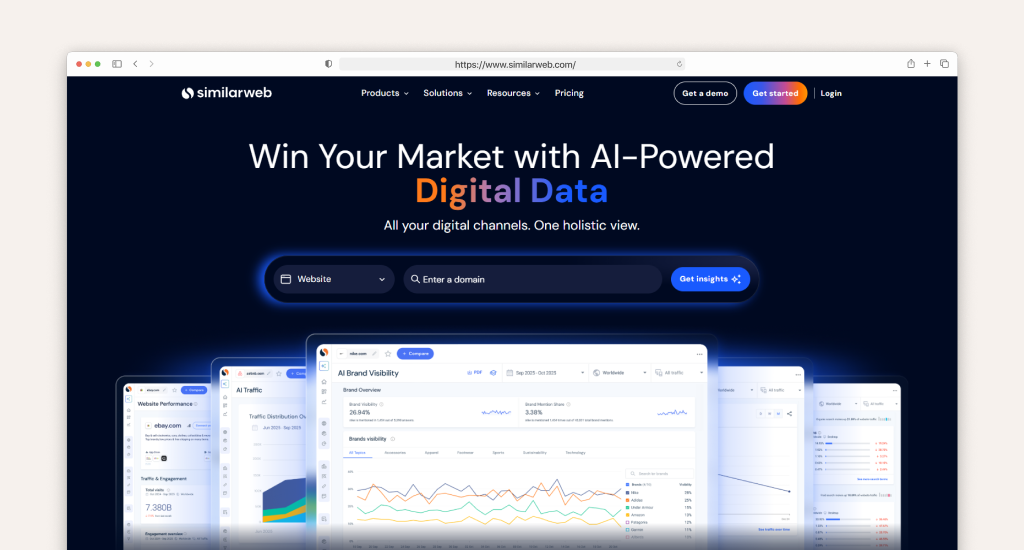
Similarweb AI Brand Visibility focuses on clear market insight across AI platforms. It shows how your brand appears by topic, prompt, and source. So, it can help teams quickly understand visibility gaps and competitive position while getting rid of common marketing mistakes.
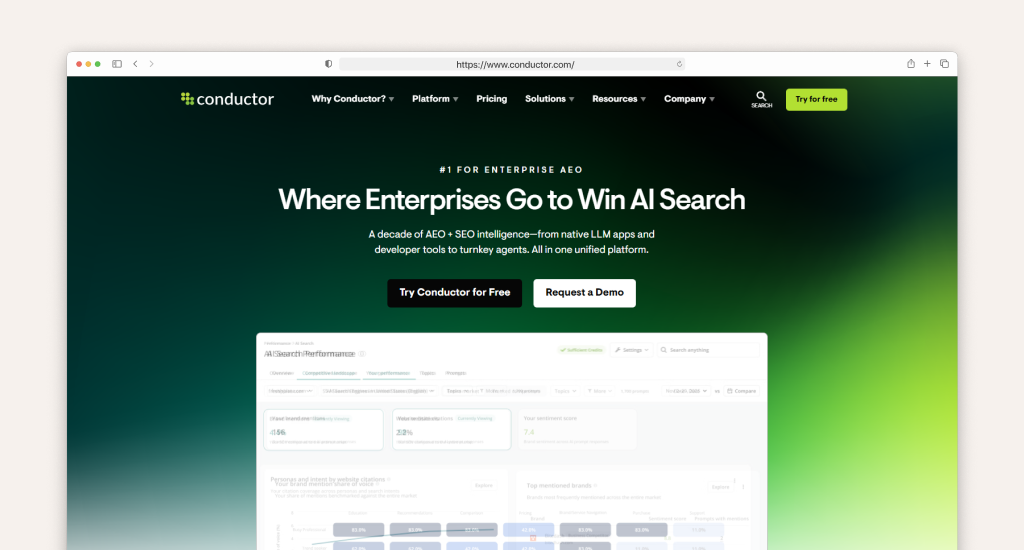
4. Conductor (Enterprise AEO / AI Search)
- Website: https://www.conductor.com
- Best for: Enterprise teams that need structured AI visibility evaluation.
- What it tracks: ChatGPT, Perplexity, Google AI features, and more; tracks visibility, attribution, competitor benchmarks, and crawl activity across AI and search systems.
- Standout features:
-
-
- Strong framework based on engine coverage, insights, and competitor benchmarking.
- Tracks how content gets discovered through crawl monitoring and attribution data.
- Connects insights with clear actions for large content and SEO teams.
-
- Limitations:
-
- Built mainly for enterprise use, which may feel heavy for smaller teams.
- Requires setup and alignment with existing workflows.
- Ideal user: Enterprise, large organizations
Conductor focuses on enterprise-level AI visibility with a structured evaluation approach. The platform connects engine coverage, competitor insights, and attribution data, which helps teams understand performance and improve how AI systems surface their content.
5. Adobe LLM Optimizer
- Website: https://business.adobe.com
- Best for: Large enterprises needing integrated AI visibility and execution.
- What it tracks: ChatGPT, AI search systems, and enterprise channels; tracks share of voice, citations, visibility gaps, and performance across AI-driven experiences.
- Standout features:
-
-
- Provides prescriptive recommendations based on detected visibility gaps.
- Supports one-click implementation through Adobe Experience Manager.
- Strong integration with enterprise marketing and content systems.
-
- Limitations:
-
- Requires the Adobe ecosystem for full value and smooth execution.
- High cost may limit access for smaller teams.
- Ideal user: Enterprise
Adobe LLM Optimizer brings AI visibility tracking together with direct action inside one system. The platform highlights gaps in citations and share of voice, then helps teams apply fixes quickly through built-in enterprise integrations.
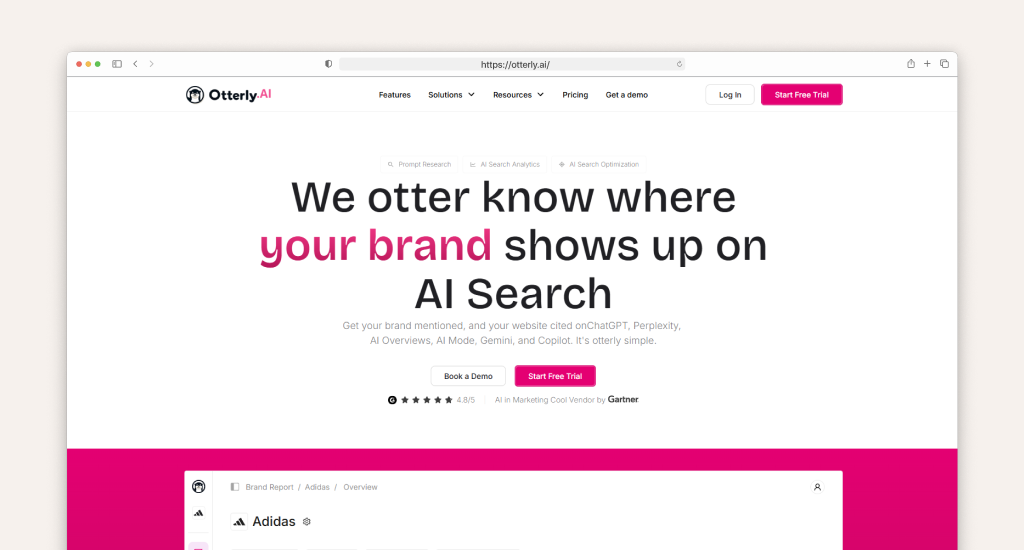
6. Otterly.ai
- Website: https://otterly.ai
- Best for: Simple and affordable AI visibility monitoring.
- What it tracks: Google AI Overviews, ChatGPT, and Perplexity; tracks brand mentions, content performance, and visibility trends across key AI platforms.
- Standout features:
-
-
- Tracks visibility across major AI engines with easy setup.
- Focuses on GEO and content performance insights.
- A clean dashboard that suits small teams and quick analysis.
-
- Limitations:
-
- Limited advanced analytics compared to enterprise tools.
- Fewer automation and deep optimization features.
- Ideal user: SMBs, startups, small agencies
Otterly.ai offers a simple way to monitor brand visibility across major AI platforms. The tool highlights content performance and mentions clearly, which can help smaller teams track progress without complex setup or heavy investment.
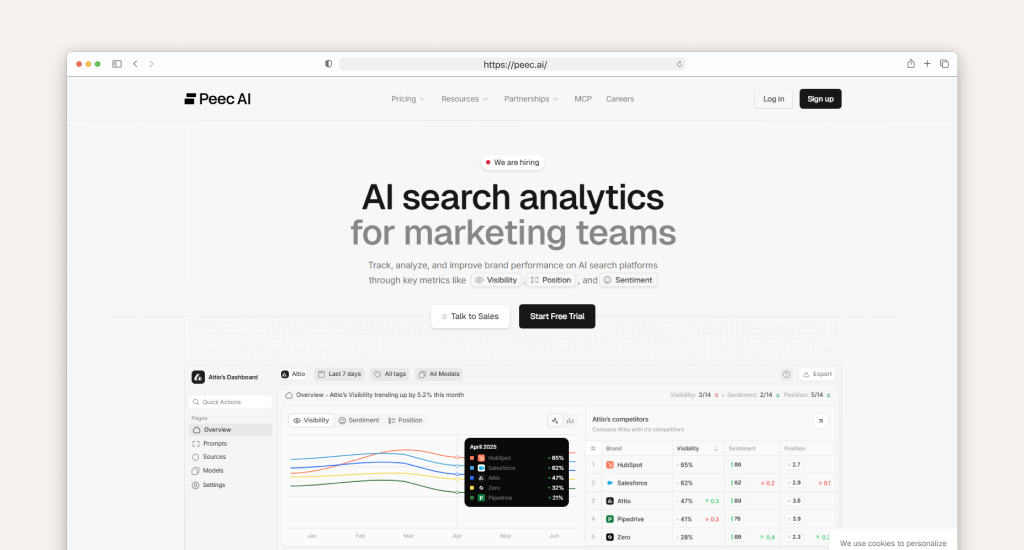
7. Peec AI
- Website: https://www.peec.ai
- Best for: Teams that rely on prompt-based AI visibility tracking.
- What it tracks: ChatGPT, Perplexity, and similar engines; tracks visibility share, ranking position, sentiment, and prompt-level performance across AI responses.
- Standout features:
-
-
- Uses prompts as the core structure for tracking visibility and performance.
- Tracks sentiment and ranking position for better brand evaluation.
- Supports multi-country tracking for global AI visibility insights.
-
- Limitations:
-
- Requires strong prompt planning to get full value.
- Less focus on technical SEO or crawler-level diagnostics.
- Ideal user: Agencies, mature content teams
Peec AI focuses on prompt-driven visibility tracking across AI systems. The platform highlights ranking position, sentiment, and share of voice. So, it can help teams understand how specific queries influence brand presence inside AI-generated answers.
8. Rankscale
- Website: https://www.rankscale.ai
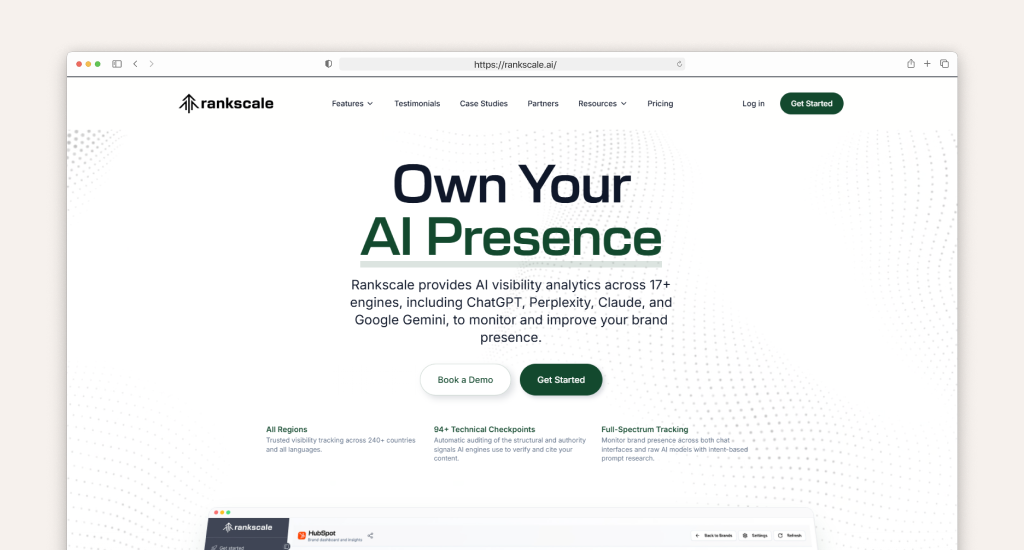
- Best for: Brands that want focused GEO tracking and optimization.
- What it tracks: AI search engines like ChatGPT and Perplexity; tracks brand presence, visibility trends, and optimization signals across AI-driven search environments.
- Standout features:
-
-
- Built specifically for GEO with a focus on AI search visibility.
- Tracks and analyzes brand presence across multiple AI platforms.
- Recognized in third-party industry lists as an emerging AI visibility tool.
-
- Limitations:
-
- Limited ecosystem compared to larger enterprise platforms.
- Fewer advanced integrations for complex workflows.
- Ideal user: SMBs, startups, growth-focused teams
Rankscale provides a focused approach to AI visibility within modern search systems. The tool helps brands analyze presence and improve performance, while external industry listings also highlight its growing role in GEO optimization tools.
9. Scrunch
- Website: https://www.scrunch.com
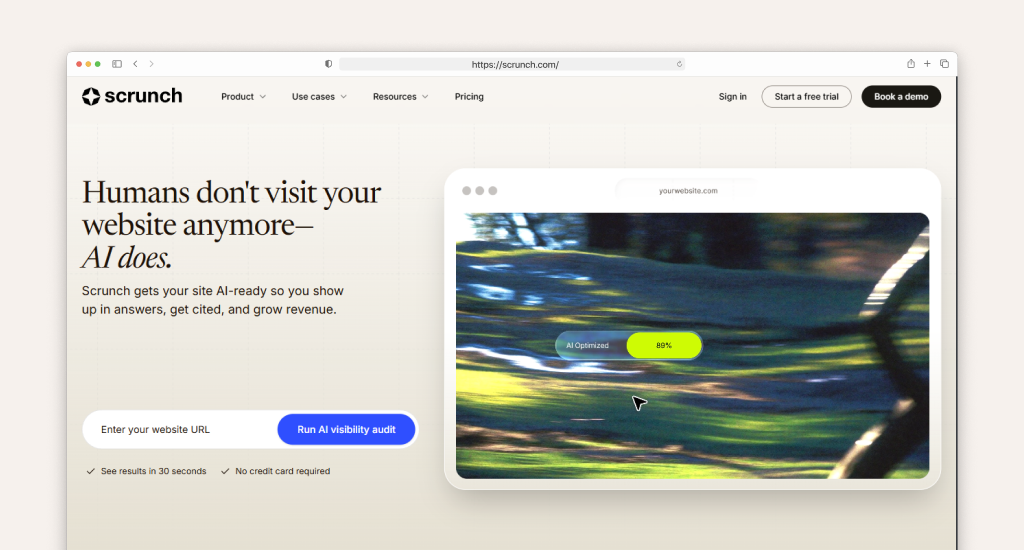
- Best for: Monitoring brand presence across the AI-driven customer journey.
- What it tracks: AI platforms like ChatGPT and other systems; tracks brand mentions, visibility patterns, and user journey insights across AI interactions.
- Standout features:
-
-
- Focuses on the full AI-first customer journey, not just search results.
- Combines monitoring with actionable insights for brand visibility.
- Helps teams understand how users interact with AI before decisions.
-
- Limitations:
-
- Less emphasis on deep technical fixes or crawler analysis.
- May require pairing with other tools for full optimization.
- Ideal user: Agencies, mid-sized businesses, brand teams
Scrunch centers on how users interact with brands through AI systems during their decision journey. The platform combines monitoring with insight, which helps teams adjust content and improve visibility across key AI touchpoints.
10. Hall
- Website: https://www.usehall.com
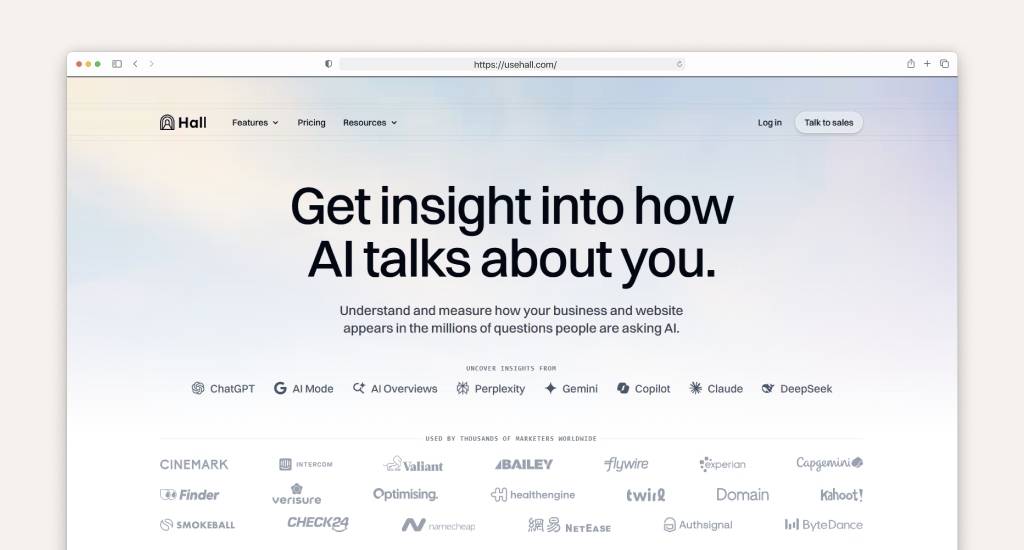
- Best for: Free multi-platform AI visibility overview.
- What it tracks: ChatGPT, Gemini, Perplexity, Copilot, Claude, DeepSeek, and Google AI features; tracks brand mentions, citations, and agent-level activity across AI systems.
- Standout features:
-
-
- Free shareable report with wide AI engine coverage.
- Tracks citation sources and brand presence across multiple platforms.
- Includes agent analytics to understand how AI systems reference content.
-
- Limitations:
-
- Limited depth compared to paid enterprise tools.
- Fewer advanced optimization or workflow features.
- Ideal user: SMBs, startups, beginners
Hall offers a simple entry into AI visibility tracking across many platforms. This tool provides a free report with citation insights and broad coverage, which really helps teams understand where their brand appears without upfront cost.
11. Nimt.ai
- Website: https://www.nimt.ai
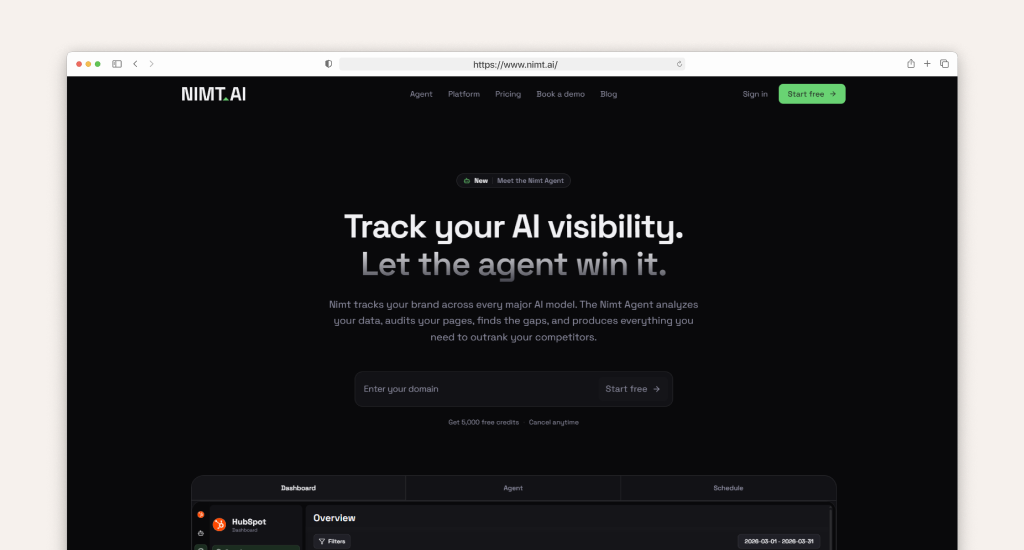
- Best for: Prompt discovery and competitor visibility analysis.
- What it tracks: ChatGPT and other AI systems; tracks search visibility, prompts, citation sources, and competitor share of voice across AI-generated answers.
- Standout features:
-
-
- Generates relevant prompts based on AI search behavior.
- Tracks competitor visibility and share of voice across topics.
- Highlights citation sources that influence AI answers.
-
- Limitations:
-
- Smaller platform with limited integrations.
- May lack advanced reporting features for enterprise teams.
- Ideal user: SMBs, agencies, growth teams
Nimt.ai focuses on AI search visibility with strong prompts and competitor insights. The platform reveals citation patterns and share of voice. So, it can help teams adjust content and improve how AI systems reference their brand.
12. Waikay
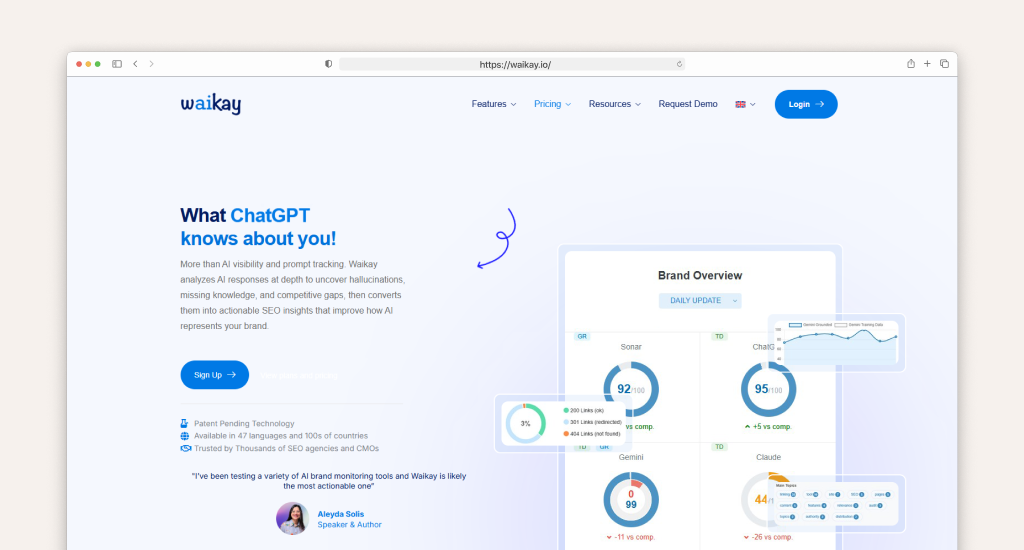
- Website: https://www.waikay.io
- Best for: Simple AI search optimization with prompt tracking.
- What it tracks: Multiple LLM platforms, including ChatGPT and others; tracks brand visibility, prompts, and performance trends across AI search environments.
- Standout features:
-
-
- Tracks visibility across different AI platforms in one dashboard.
- Focuses on prompt tracking for better content alignment.
- Helps monitor brand presence across evolving AI search systems.
-
- Limitations:
-
- Limited advanced analytics compared to larger tools.
- Fewer integrations with external marketing platforms.
Ideal user: SMBs, startups, small teams
Waikay provides a focused solution for tracking brand visibility across AI platforms. The tool highlights prompt performance and visibility trends, which can help teams adjust content strategy for better results in AI-generated answers.
What “Good” Looks Like (Metrics to Track)
Strong performance in LLM visibility analysis software depends on clear metrics that show real presence inside AI answers. These metrics help you measure progress, fix weak areas, and improve how your brand appears.
- AI Share of Voice (topic-level visibility): It shows how often your brand appears for a specific topic inside AI answers. A higher share means stronger authority and better visibility compared to competitors.
- Mentions Rate: This rate measures how often your brand appears versus how often it does not appear. A higher rate means your content gets picked more often by AI systems.
- Citation Sources: It tracks which websites or domains AI tools use when they mention your brand. Strong sources improve trust and increase the chance of consistent visibility.
- Sentiment / Positioning: It shows how AI describes your brand, whether positive, neutral, or negative. Good sentiment builds trust and shapes how users view your products or services.
- Prompt Segments: This group of user questions into high-intent or informational types. It helps you focus on prompts that result in action, not just general curiosity.
These types of metrics follow a clear structure used by Similarweb, which focuses on topics, prompts, and sources. They also align with Semrush, which tracks visibility, sentiment, prompts, and technical audit signals.
Implementation Plan (Discovery → Validation, Like ChatGPT’s Fan-Out)
This simple plan shows where to find the best LLM optimization for AI visibility using clear steps. Each stage helps you test prompts, improve content, and track results across AI systems with confidence.
Discovery
Select 30 to 100 prompts that include brand and non-brand queries across important topics. These prompts should reflect real user questions so you can see how AI systems respond to your content.
Validation
Check which AI engines show your brand and review citation sources used in answers. Compare results with competitors to understand your current position and identify gaps that reduce your visibility.
Action
Fix the five biggest content gaps based on missing mentions and weak citations. Add clear definitions, trusted data points, and structured sections that AI systems can easily extract and present.
Monitoring
Run prompt checks every week across key AI platforms to track visibility changes. Use alerts to detect sudden drops or gains, so your team can take quick action when needed.
Reporting
Prepare a monthly report that shows share of voice, citation growth, and completed updates. This helps teams track progress and present clear results to stakeholders and decision makers.
Research from Princeton University shows that strong GEO practices can improve AI visibility by up to 40 percent. This makes consistent tracking and structured updates an effective long-term strategy.
End Note
AI search will keep growing, and brands that adapt early will stay ahead. The right tools help you track visibility, fix gaps, and build trust inside AI answers where users now spend more time.
Focus on clear metrics, strong sources, and regular updates to improve results over time. When your content matches how AI systems select answers, your brand gains more mentions, better reach, and steady growth.