Yes. You can use Google Business Profile without a website, and many local shops do this every day. Google lets a business appear on Maps and local results with only a profile.
A website is not a rule for approval or display. Your profile can still show your name, address, phone number, and services.
This guide explains how Google Business Profile works without a site, what affects local rank, and how to build trust through NAP and citations.
Do You Need a Website to Create or Verify a Google Business Profile?
No, Google does not require a website to create, verify, or manage a Google Business Profile.
This answer is simple and clear. You can open and run a Google Business Profile without website support. A website is not part of the approval rule. Google checks your business details, not your site.
To start, you must enter basic business info. It includes your business name, phone number, and category. You also add a location. This info can be a real address or a service area if you visit customers. Google then completes verification through a code by phone, email, or video.
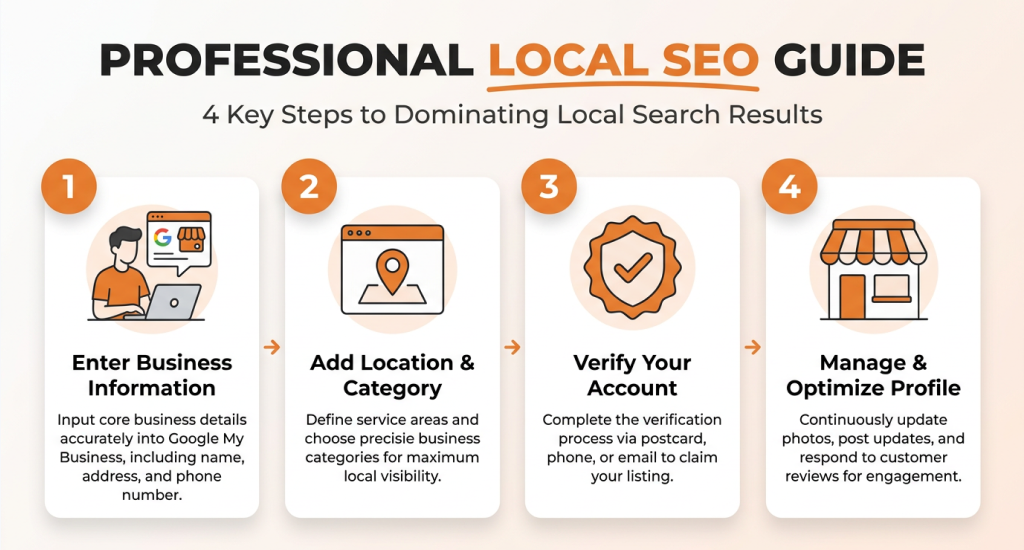
Here are the requirements for Google Business Profile setup:
- Business name that matches real-world use
- Address or service area
- Phone number that works
- One main category that fits your service
The website field is optional. You may leave it empty. Many owners do this during Google Business Listing setup.
Some businesses often work with no site. Examples include plumbers, cleaners, mobile repair shops, tutors, and home-based services. These also fit a service area business Google profile.
If you want, you can link a Google Sites page or a social page. This step is optional. You can also add a website to Google My Business later.
So yes, Google Business Profile without a website is fully possible. The setup works from start to finish with zero site needs.
Will Not Having a Website Hurt Your Google Business Profile Rank?
Not having a website does not directly harm your ability to appear in Google Maps or the Map Pack, but it may reduce your competitiveness in certain niches.
So, can a business show up on Google without a website? Yes. Google Maps results depend on three main signals. These are distance, relevance, and prominence.
Distance means how close your business is to the searcher. Relevance means how well your profile matches the search. Prominence means how well-known your business looks online.
A website helps with relevance. It gives Google extra text about your services and categories. A site also helps with prominence. Links, brand mentions, and reviews act as trust signals. Without a site, Google still uses your profile details, photos, reviews, NAP, and citations.
There is no penalty for having no website. Google does not block or lower profiles for this reason. The gap is indirect. Some niches face more competition, so extra signals help.
Many local services still rank well with no site. Examples include cleaners, landscapers, handymen, and mobile repair services.
When Google sees no site, it relies more on profile accuracy and activity. A strong profile can still earn solid visibility.
When Does Not Having a Website Become a Competitive Disadvantage?
Not having a website becomes a disadvantage in industries where competitors rely on websites to build authority, trust, and topical relevance.
This gap appears when buyers expect proof, details, and depth before contact. In such spaces, a profile alone may feel thin.
Industries where a website matters more
- Lawyers – People expect case types, licenses, and clear service pages
- HVAC – Buyers compare services, prices, and coverage
- Contractors – Photos, past work, and scope build confidence
- Medical professionals – Trust and clarity matter before contact
- Multi-location brands – Consistency across locations helps rank and convert
Why competitor websites help
- More service details improve topic match
- Backlinks raise local authority
- Clear pages support business credibility
Other limits
- Some users doubt the legitimacy without a site
- Fewer details reduce calls and leads
A simple one-page site can fix most issues. It adds trust, supports rank signals, and keeps costs low.
How to Optimize Your Google Business Profile If You Don’t Have a Website
You can still rank well on Google Maps without a website by strengthening your GBP signals and building local citations. A complete and active profile helps Google trust your business and show it to nearby users.
1. Build Strong Local Citations
Citations are online mentions of your business name, address, and phone number. These appear on business directories and local platforms. You should add your business to Google Maps, Bing Places, Yelp, and local listing sites.
Each correct mention supports the Google Business Listing setup strength. Google uses these mentions as proof that your business is real and active.
2. Keep NAP Perfectly Consistent
NAP means name, address, and phone number. These details must match everywhere. Even small changes can confuse Google. You should use the same format on your profile, directories, and social pages. NAP consistency is one of the easiest trust signals you control.
3. Complete Every Profile Section
Fill all parts of your profile. You should choose the best primary and secondary categories. Try to add services, products, business hours, and attributes. Attributes explain features like wheelchair access or home service. A full profile gives Google clear signals about relevance.
4. Share Updates on Your Profile
You should use the update feature to post offers, news, or service notes. Short posts work well. It shows activity and care. Google prefers profiles that stay active. Regular updates also help users trust your business.
5. Upload Real Photos
Photos raise visibility and clicks. You must add images of your location, work, team, and tools. Fresh photos support prominence. Real photos help users decide faster and stay longer on your listing.
6. Collect Honest Customer Reviews
Reviews are a major rank signal. You should ask happy customers for feedback. Reply to every review with care. Real reviews show quality and reliability.
Simple Workflow Example
You should set up your profile. Fix NAP. Add categories and services. List your business on directories. Post weekly updates. Also, try to add photos monthly. Don’t forget to ask for reviews after each job. This system works well even with no website.
Should You Add a Website Later?
Yes, adding even a simple website later is highly recommended. It really strengthens authority, improves conversions, and supports long-term growth.
A website gives your business its own space on the internet. Your profile can answer quick questions, but a site explains your service in full. It helps visitors feel safe before a call or visit. Many owners start with no site and still grow. Later, if you add your website to Google, your business helps push results further.
Main benefits of a website
- Clear service details in one place.
- Better trust for new customers.
- More chances to turn visits into calls.
- Extra proof that your business is real.
For many small businesses, one page is enough. This page can show services, areas served, phone number, and reviews. It does not need a fancy design. A clean page works well and saves cost.
A free option exists. You can use Google Sites to create a basic page. Google accepts it and links it easily to your profile. This site counts as a real site.
When you add a website to Google My Business, Google gains more details about your work. It supports relevance and prominence. Links from other sites can also help later.
A website becomes essential in some cases. Examples include multi-location brands and highly competitive industries. In these spaces, Google profiles without sites often fall behind.
You should start without pressure. Try to add a site when growth demands it.
Final Thoughts
You can use Google Business Profile without a website, and many local businesses do this with success. A complete profile can still show on Maps and bring calls. A website is not a rule for approval or display.
In busy and competitive niches, a simple site helps build trust and stronger authority. You can start with a clean and accurate profile. Fix details, reviews, photos, and citations.
When growth slows, you should add a basic site to support long-term progress. The next step is clear. Improve your profile now or create a small site later.