Customers around you are searching for services every day, and your business can appear right when they need help. A clear local business marketing checklist can guide you step by step to reach these local customers and turn them into loyal clients.
This checklist covers simple actions for planning, online visibility, offline promotion, and tracking results. Even small businesses with limited budgets can follow it without confusion or stress. It focuses on what truly brings local leads and builds trust.
Keep reading to see a practical guide to learn how to market a local service business and grow it steadily by attracting more customers nearby.
Should I Make A Checklist for Local Service Business Marketing?
Yes, you should make a checklist to stay organized and focused on what matters most for your local business. Without it, many small businesses waste money on random ads or forget key steps like customer follow-up, local SEO optimization, or review requests..
It also keeps your progress clear. You can see what is done, what is pending, and what needs improvement. This approach saves time and builds steady results instead of short bursts of luck.
Why a checklist helps:
- Keep your marketing plan clear and simple.
- Avoids missed steps and wasted budget.
- Helps track growth week by week.
- Build habits that bring consistent local leads.
Local Service Business Marketing Checklist
Before you jump into paid ads or social media, make sure the basics are strong. These steps like measuring your business goals, defining personas, analysing service areas, and budget allocation. These steps will help you plan, stay organized, and spend your marketing budget wisely. So, include them in your checklist for the best outcome:
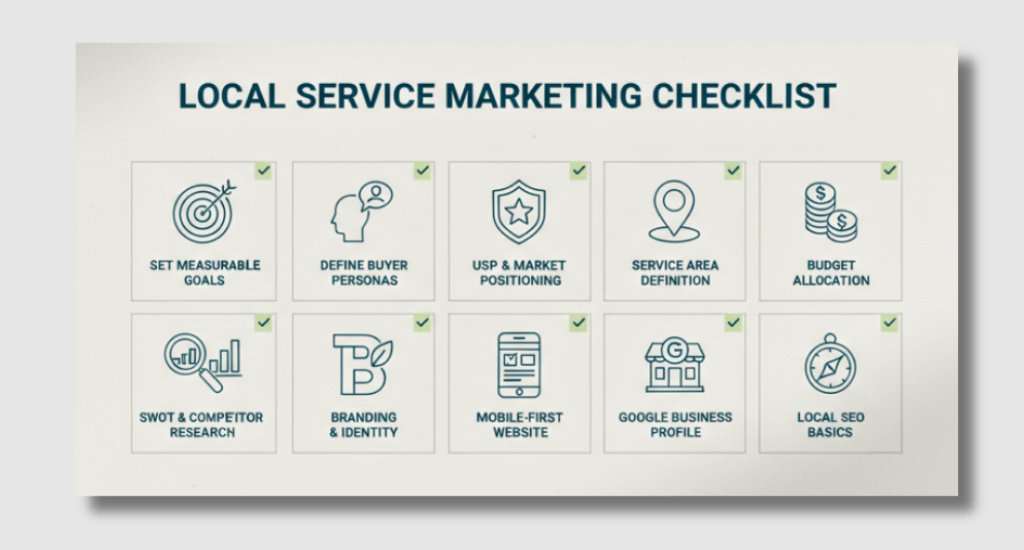
1. Set Measurable Goals
Every business needs a clear target. Without goals, it’s like driving without direction. Decide what success looks like for you: more phone calls, new leads, or higher monthly sales?
Start small and practical. Maybe you want 30% more website visitors in three months or 20 new leads per month. Write it down and review it weekly. These numbers help you track progress and see which local marketing ideas for small businesses work.
Keep goals simple, specific, and time-bound so you can measure your growth instead of guessing.
2. Define Buyer Personas
You must know who your best customers are before you try to reach them. A buyer persona is a short profile that explains your typical customer.
Think about:
- Age group: >Are they young homeowners or older families?
- Gender and location:> Who usually calls you, and from which area?
- Pain points: >What problems do they want you to solve?
- Contact method:> Do they prefer calling or filling out a form online?
- Where your ideal customers spend time: >Are they active on social media, searching on Google, or browsing through local search listings?
When you understand this clearly, your ads, website, and social media marketing strategies will feel more personal and bring better local leads.
3. USP & Market Positioning
Your Unique Selling Point (USP) shows why customers should pick you instead of others. It could be fast service, longer warranties, honest pricing, or skilled local experts.
How to Build a Strong USP:
- Know what your competitors promise.
- Find one thing you can do better.
- Keep your promise visible on every platform.
- Use the same message on your website, ads, and social posts.
When your message is clear and consistent, it builds trust and helps your business stand out in local searches.
4. Service Area Definition
If your business serves certain cities, zip codes, or neighborhoods, note them carefully. You can’t market to everyone, so focus on where you actually serve.
Make a list of areas that bring you the best clients. Then, use those names on your website, ads, and Google Business Profile. This helps you appear in local search results, do local branding for you, and attract people who are nearby and ready to book.
Pro Tip: Create small location-based pages on your website for each major area. It improves your visibility for “near me” searches.
5. Budget Allocation
A marketing budget helps you spend wisely instead of guessing. Decide how much you can invest each month and divide it among key areas:
- Online ads (Google or Meta)
- Content creation (blogs, photos, videos)
- Local events or sponsorships
- Tools for email, SMS, or review management
Keep a simple spreadsheet to track each cost and compare it with your results. If one channel performs better, shift your budget there. Smart spending gives you better control and higher returns.
6. SWOT Analysis & Competitive Research
A SWOT analysis means checking your Strengths, Weaknesses, Opportunities, and Threats. It’s a simple tool that shows what you’re doing well and what needs work.
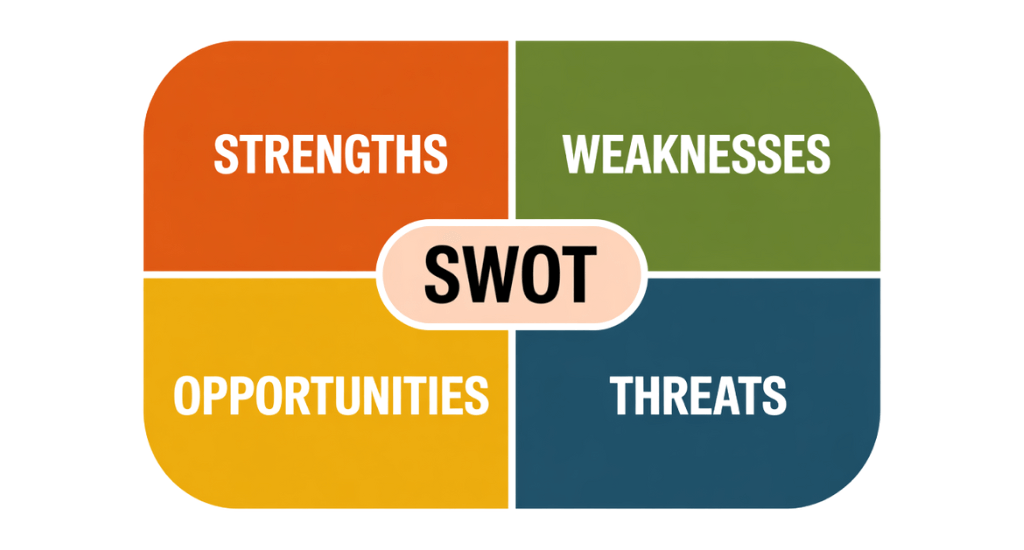
Example Breakdown:
- Strengths:> Skilled staff, quick response, good reputation
- Weaknesses: >Limited online reviews, slow website
- Opportunities: >Growing demand in new neighborhoods
- Threats:> Lower-priced competitors or new local entries
Also, take a look at your competitors’ websites and ads. See how they present their services and reviews. This research helps you learn what customers expect and where you can improve.
7. Branding & Identity
Brand look and voice help people trust your business fast. A clear logo, steady color set, and one main font make your brand easy to spot. Use the same look on vans, uniforms, websites, and flyers to build trust.
Write a short mission line that explains what you do and why you care. Keep the voice friendly and plain. Use that voice in ads, replies, and service pages so customers feel the brand is reliable.
8. Mobile-First Website Design & Conversion Basics
Most local visitors use phones. A site that loads fast and shows a clear call button makes them call. Keep booking simple; focus each page on one service or one location so users find what they need.
- Fast load times: Make pages open in under three seconds. Test speed and fix slow parts.
- Clear CTAs: Place a click-to-call button and a short booking form near the top.
- Schema markup: Add LocalBusiness, Service, FAQ, and Review schema so search engines read your info.
- Media optimization: Use real photos, short videos, and short testimonials to build trust.
9. Google Business Profile (GBP) Optimization
A good GBP often shows before your website. Claim and verify the profile so your business appears on maps and local search. Keep name, address, and phone correct and match them on every site.
Add several photos and a short video that show your team and real work. Post quick updates or offers weekly. Answer messages, reviews, and questions fast to keep the profile active and useful.
10. Local SEO Fundamentals
Local SEO helps people nearby find your service when they search. Use city words on your pages and keep your business details the same everywhere. Build local links from partners and news pages to boost trust.
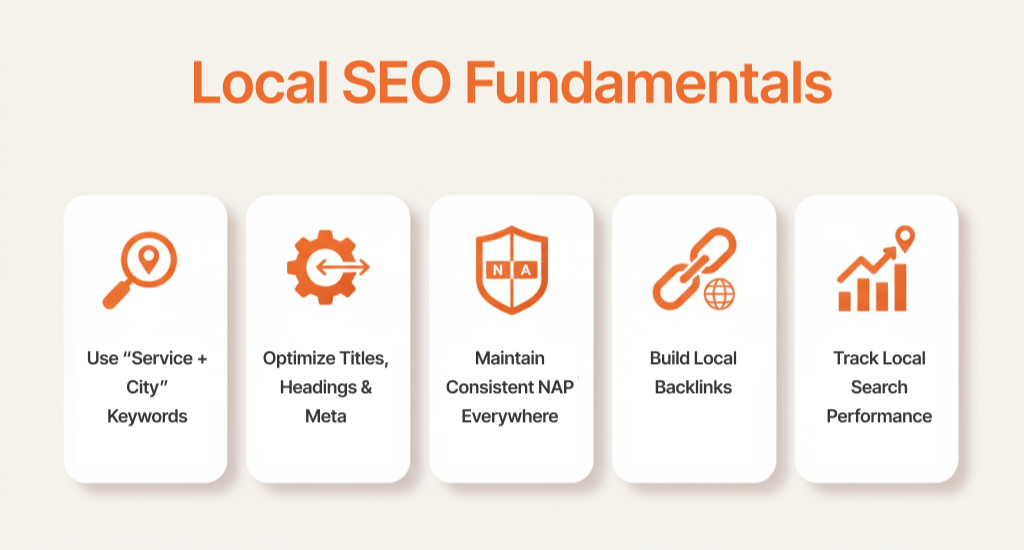
- Do keyword work for “service + city” and “near me” searches.
- Optimize page titles, headings, and meta descriptions.
- Keep NAP exactly the same across directories.
- Get links from local chambers, vendors, and news sites.
11. Content Marketing
Good content proves you know the local problem and shows how you solve it. Make clear service pages, short FAQs, and simple blog posts that answer real customer questions. Use client stories and step-by-step posts to show real results.
- Service pages: Write one focused page for each main service with clear steps and price hints.
- Neighborhood pages: Add short pages for the main areas you serve with local details and photos.
- Case studies & testimonials: Show a short before/after story and a client quote on each relevant page.
- Repurpose content: Turn blog answers into GBP posts, social snippets, and short videos.
12. Lead Magnets & Conversion Offers
People rarely take action without a reason. Lead magnets help turn curious visitors into real leads by giving them small but useful value first. Offer something that helps them right now, not later.
You can use checklists, short guides, or even a free home service audit. Make it easy to access, without asking for too much info. Then follow up with a call or short email.
Tips for better conversions:
- Use strong primary and backup CTAs (like “Get Free Estimate”).
- Add urgency: “Same-day visits” or “Free spot left this week”.
- Keep the offer simple and direct.
13. Paid Advertising
Paid ads help local service businesses reach people who need help now. But without a plan, it can eat your budget fast. Start small, test results, and scale only what works.
-
Google & Local Services Ads
Run search ads targeting your service and city names. Add call and location extensions so people can call you directly. It helps you appear when customers search for nearby services urgently.
-
Social Media Ads
Facebook and Instagram let you target local neighborhoods easily. Use real photos of your team or projects, short captions, and a clear call to action like “Book Today” to build trust quickly.
-
Budget Tracking
Track the cost per lead weekly and note which ad brings the best return. A small change in targeting or copy can double your results without raising the ad budget.
-
Strong Ad Copy
Write simple, direct lines that show the benefit right away. Example: “Fast AC repair in East Hanover, Call Now.” Avoid fancy words; clear intent wins every time.
14. Reviews & Reputation Management
Good reviews work like word of mouth but reach more people. Build a process to ask for feedback after every service and make it easy for local SEO clients to post.
Use ready-made response templates to reply fast, positive or negative. Don’t ignore bad reviews. Respond calmly and fix issues if possible.
Checklist for review growth:
- Send automated review requests after service.
- Check Google and Yelp reviews every week.
- Show reviews on your website with schema markup.
- Celebrate good reviews in social posts.
15. Social Media & Community Engagement

Social media helps your business look active and trusted. It connects you with locals and builds relationships beyond sales. Stay consistent but focus on value, not volume.
-
Claim All Key Profiles
Create accounts on Facebook, Instagram, TikTok, and LinkedIn. Keep your name, logo, and contact details the same everywhere. Consistency makes your business look reliable and easier to find.
-
Post Local Content
Share local stories, before-and-after results, and quick service tips. Show your real work instead of stock photos. People trust what feels genuine and familiar in their own neighborhood.
-
Engage in Local Groups
Join community groups, answer simple questions, and share advice when needed. It helps people remember your name naturally, not just as an ad.
-
Encourage User Content
Ask happy customers to share photos or tag your page. Offer small shoutouts or discounts. This creates trust and helps more locals see your service in real use.
16. Email & SMS Marketing
Direct messages still convert best. Keep them short, friendly, and personal. Always send something helpful, not just sales pitches.
Build your list through offers, forms, or guides on your site. Then use simple message sequences that remind leads about your service.
Smart contact ideas:
- Send a 3-step email flow: welcome → social proof → offer.
- Reconnect with old leads every few months.
- Use local updates and event invites to stay relevant.
17. Offline Marketing Tactics
Offline marketing still matters because it makes your business visible where your customers actually live. These methods help your name stay familiar and trusted beyond the screen.
-
Local Business Partnerships
Work with nearby stores or service providers who share your audience. Offer package deals or exchange flyers to reach people already interested in local solutions.
-
Community Events & Sponsorships
Sponsor school games, local fairs, or charity drives. Small banners or booths make your brand look active and caring, not just commercial.
-
Direct Mail Campaigns
Send postcards or discount coupons to nearby homes. Add a clear offer and contact number. People still check their mail, and a good design can grab attention fast.
-
Branded Presence
Use clear signage, clean uniforms, and vehicle wraps. They work like moving billboards and make your team easy to recognize across town.
18. Tracking & Analytics
Tracking tells you if your marketing actually works. Without it, you can’t see what brings leads and what wastes time. Data helps you focus on real results, not guesses.
Main tools to use:
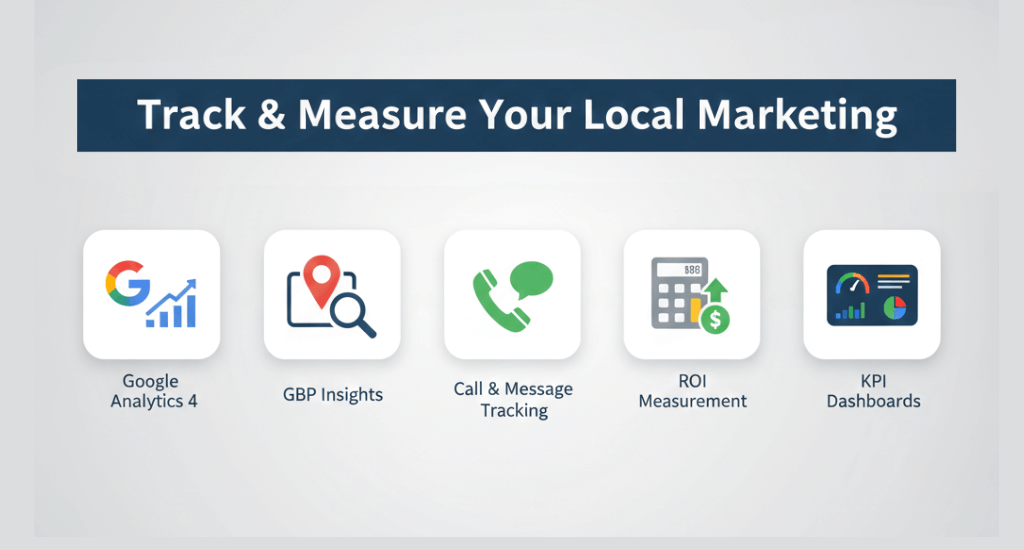
- Google Analytics 4 (GA4): Track forms, calls, and bookings directly.
- GBP Insights: Check calls, directions, and profile views weekly.
- Call Tracking Numbers: Use separate numbers for ads to see which one converts.
- Lead Reports: Review results weekly and adjust next month’s plan.
19. KPI Reporting Cadence
Reports keep your marketing clear and measurable. You don’t need fancy dashboards, just a simple table showing how your local marketing checklist performs over time.
Track progress like this:
- Weekly: Leads, calls, form fills, GBP actions
- Monthly: Website visits, conversion rate, cost per lead
- Quarterly: Lifetime value (LTV), customer cost (CAC), return on investment (ROI), local search rankings
Regular reporting helps you see slow trends and catch small drops before they become serious.
20. Local Keywords & Semantic Entities
The right keywords help search engines understand your business area and audience. Using local terms connects your website to nearby searches and improves visibility fast.
Location Keywords
Use combinations like “plumber near me,” “AC repair in East Hanover,” or “best electrician [city name].” These bring people ready to book right away.
-
Entity Mentions
Include trusted sources like the local chamber, BBB, or Yelp on your site. It helps Google link your business with real, verified networks.
-
Neighborhood Focus
Create small pages for each area you serve. It gives you more chances to appear when locals search for help nearby.
21. Schema & Technical SEO
Schema helps search engines understand your website better. Think of it as giving Google a clear guide to your business details.
Add these schema types:
- LocalBusiness: Include your business name, phone number, address, hours, and area served.
- FAQPage: Mark up question-and-answer sections.
- Review Schema: Show verified customer reviews for extra credibility.
- Service Schema: Describe each service clearly for better local results.
These small technical updates often improve how your site appears in search, especially for “near me” results.
Tips to Track & Measure Your Local Marketing Efforts
Tracking helps you see what truly moves your business forward. Instead of guessing, you’ll know exactly which local marketing ideas for small businesses bring results and where your time or money is being wasted.
-
Use Google Analytics 4 (GA4)
GA4 gives you a clear picture of where your leads come from and how they act on your site. Track calls, forms, and clicks to see which campaigns deliver quality leads and which need improvement.
-
Review Google Business Profile Insights
Your GBP shows how locals find and interact with your business. Check weekly data for calls, messages, and post views. It helps you know if your local visibility is growing or slowly dropping.
-
Track Calls and Messages Separately
Don’t mix every lead together. Use unique phone numbers for ads, emails, or your website. This way, you’ll easily learn which channels drive real customers and which ones only create noise or clicks.
-
Measure ROI Across Channels
Write down how much you spend on every ad, event, or SEO task. Then note how many real leads or paying customers came from it. This simple habit helps you make smarter marketing choices.
-
Record Weekly & Monthly KPIs
Weekly reports show short-term changes; monthly reports reveal real growth. Keep track of leads, calls, and ROI to spot trends early and take quick action before results start to fall.
-
Use Visual Dashboards for Clarity
Charts make numbers easy to read. Create a basic dashboard in Google Sheets or Data Studio showing leads, costs, and calls. A visual view keeps your team motivated and decisions data-driven.
Common Local Marketing Mistakes to Avoid
Even small errors can waste time and money when marketing locally. Many business owners focus on random tactics without a plan or skip the basics. Avoiding these most common marketing mistakes helps your marketing deliver real leads and steady growth.
-
Ignoring Google Business Profile
Many local businesses don’t claim or optimize their GBP. Without it, you miss calls, direction requests, and “near me” searches. Make sure your profile is complete with accurate NAP, photos, and regular posts to appear trustworthy.
-
Targeting Too Broad an Area
Marketing to areas you don’t actually serve wastes money. Focus on the cities, neighborhoods, and zip codes where local SEO clients can realistically reach you. Local campaigns are more effective when highly targeted and specific.
-
Weak Website or Slow Pages
A website that is slow or hard to navigate frustrates visitors. Most local searches happen on mobile. Ensure fast loading, clear calls-to-action, and service-specific pages for each location to convert visitors into leads.
-
Neglecting Reviews
Ignoring customer reviews can cost credibility. Not asking for reviews or failing to respond lowers trust and local rankings. Collect feedback consistently and reply politely to every positive or negative review.
-
Not Tracking Results
Running ads, posting on social media, or sending emails without tracking is guessing, not marketing. Use GA4, GBP insights, and call tracking to know which efforts actually bring leads.
-
Copying Competitors Blindly
Following competitors’ ads or posts without adapting them to your own audience rarely works. Instead, create content and offers tailored to your local community and unique service strengths.
End Note
A Local Service Business Marketing Checklist helps you stay organized, track results, and focus on what truly brings leads. Following each step, from defining your audience to optimizing your Google Business Profile, builds trust and visibility in your community.
Regularly checking your progress, adjusting strategies, and avoiding common mistakes ensures steady growth. Use this checklist as your guide, and watch your local marketing efforts turn into real, paying customers.