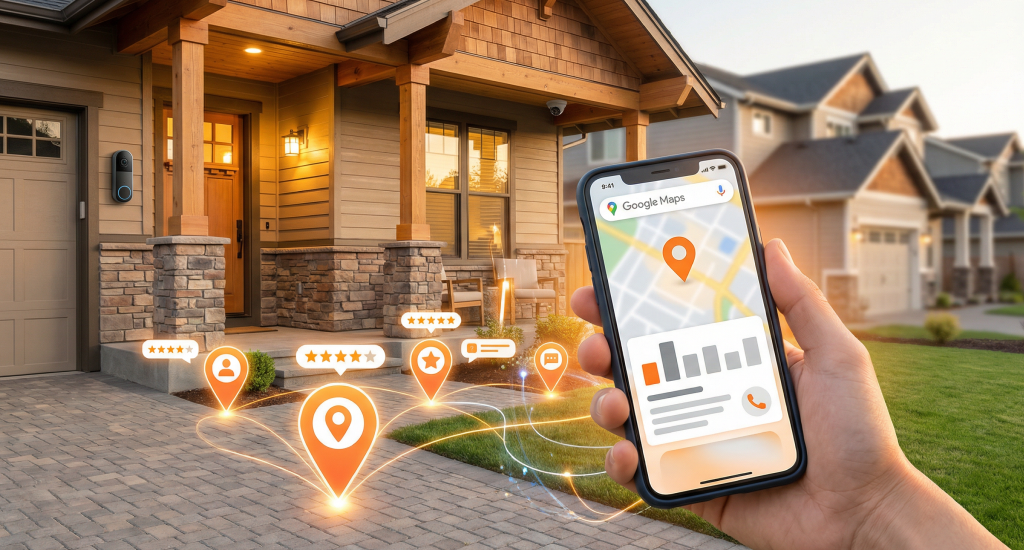
Reviews and local citations boost smart home companies by creating a trust multiplier for local search. Reviews show Google and customers that you deliver quality installations. Citations (your business name, address, and phone) listed consistently across Google, Yelp, and Angi prove you’re legitimate.
According to BrightLocal, 87% of consumers read online reviews for local businesses, and nearly half trust them as much as personal recommendations. Together, they push you into the Local Pack for searches like “smart thermostat installation near me.”
This guide walks you through the smart home company Google reviews ranking system, NAP consistency strategies, and how AI-powered search is reshaping local discovery. You’ll learn exactly which platforms matter most, how to audit your current citations, and a proven action plan to generate steady local leads without relying on paid ads.
Why Reviews and Citations Matter for Smart Home Companies?
The U.S. smart home industry is booming. According to Mordor Intelligence, experts expect the smart home market in the U.S. to reach more than US$50 billion by 2026.
That growth shows many people want home automation, security, energy-saving gadgets, and convenience in their lives. It’s because so many companies offer similar services that a business must show it can be trusted. Positive reviews and local citations for smart home businesses act as trust signals.
Good reviews and citations help you with:
- Competitive differentiation: They make a smart home company stand out among many providers.
- Customer acquisition: They help new customers feel safe in choosing that company.
- Brand strength: They build a sense of reputation and reliability.
- Better visibility: They help show the company is real and popular.
Also, appearing in Google’s “Local Pack” does not depend only on having a website. Google checks three things before showing a brand there: how relevant the brand is, how close it is to the user, and how well known it is (prominence). Good reviews and citations help with all three.
So for smart home company Google reviews and local citations do more than decorate a page; they help earn trust, attract customers, and secure visibility.
How Google Reviews Influence Local Visibility and Buyer Trust
Google reviews guide people when they study a smart home company online. These reviews also help Google understand which brand deserves more local visibility. A strong review profile tells both Google and real buyers that a company is safe, active, and trusted.
Google’s Review System and Its Role in Rankings
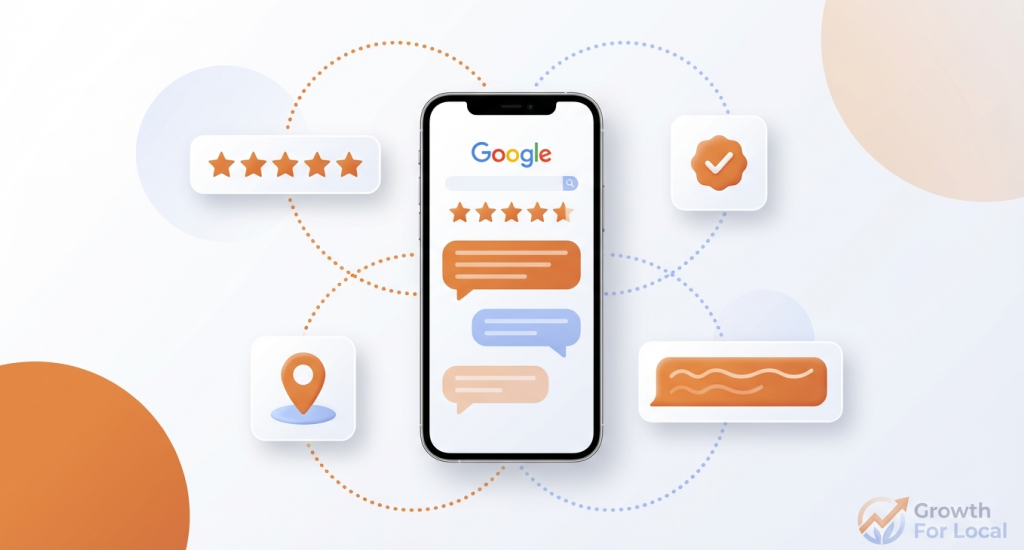
Google studies review data in many ways. Each part sends a signal about the quality of a smart home company.
- Average rating: A score above 4.0 creates trust. Buyers feel safe when they see this level of quality.
- Quantity: A large number of reviews gives Google more signals and proof that real customers use the service.
- Recency: Fresh reviews show that the company still serves people and stays active.
- Sentiment analysis: Google reads the words inside each review. Positive words lift trust. Negative words lower it.
- Entity mentions: Google checks terms tied to the Google Business Profile optimization (GBP), star ratings, sentiment relevance, E-E-A-T, review velocity, and other trust indicators. These help Google measure a company’s strength online.
BrightLocal states that “Businesses with 4 to 4.5-star ratings earn up to 30% more clicks than those below 3 stars.”
Google’s algorithm treats reviews as a local ranking factor. This falls under “prominence,” which shows how well-known and respected a company is. Strong review signals help a smart home company rise in local search results.
The Psychology of Reviews in the Smart Home Industry
Smart home systems cost a lot, so buyers want proof that a company can handle complex home automation tasks. Reviews guide them. Positive Google reviews reduce fear and doubts.
A homeowner who must select an automation installer usually checks star ratings and verified feedback. The installer with better reviews often wins the job.
A small example: One Arizona smart home company saw a 40% jump in lead calls after it reached 100 verified Google reviews within three months.
Responding to Reviews: Building Engagement and Trust
A smart home company should respond to all reviews. This includes 1-star reviews.
- Use the customer’s first name.
- Mention the exact service or situation.
- Avoid empty replies like “Thanks.”
- For negative feedback, apologize in public and explain a clear fix.
This type of customer engagement shapes a strong brand voice. It also builds a good customer service reputation. People respect a company that shows online transparency.
ReviewTrackers reports: 45% of consumers feel more willing to visit a business that responds to negative reviews.
Strong responses create trust, help the company shine, and support long-term growth.
Why Do Local Citations Matter for SEO?
A local citation is an online mention of a business’s Name, Address, and Phone number (NAP). These details appear in many places, such as Google Maps, Yelp, Angi, Houzz, Nextdoor, and chamber directories.

These are known as structured and unstructured citations. Structured ones follow a fixed format on business directories. Unstructured ones appear inside normal articles or blog pages.
Google checks NAP consistency across all these locations. Clear and matching details help Google confirm that the business stays open and active. This confirmation supports a stronger placement inside the local 3-pack.
Smart home companies can attract more leads to their GBP or website from citations on platforms such as Yelp, Angi, Nextdoor, Houzz, and other home-service sites. Data aggregators and citation management tools help spread these details across many trusted sources. This broad presence strengthens local SEO for smart home companies and boosts customer trust and online reputation.
Why citations matter:
- They help Google confirm that a business is real.
- They support higher placement in the local 3-pack.
- They reduce confusion when people search for contact details.
- They guide customers to the right location.
- They show activity across many trusted websites.
How About Combining Reviews and Citations for Maximum Impact?
Reviews and citations work well when they support each other. Citations help Google confirm where a smart home company is located. Reviews help Google understand how people feel about the company. When both stay strong, the brand looks real, active, and trusted.
Google blends these signals to judge local strength. Reviews support prominence and trust. Citations confirm relevance and accurate contact details. Together, these signals guide Google to place a business higher in the Local Pack.
Why they matter together:
- Citations confirm the exact NAP details of the company.
- Reviews show real customer experience and satisfaction.
- Google studies both signals to judge local reliability.
- Strong signals help more people reach the business online.
Simple flow: Citations verify you exist → Reviews prove you’re trusted → Google rewards you with higher visibility.
How AI and LLMs Are Changing Local Discovery
AI now plays a big role in how people discover local smart home companies. When someone searches for a phrase like “best smart home installers near Phoenix,”
Google’s AI Overviews share a short list of trusted options. These choices often come from strong reviews and clear citation details.

Large language models such as ChatGPT and Perplexity also create quick summaries of local choices. They study factual data before showing results. This means a business with accurate NAP details, steady reviews, and clean structured data has a better chance of appearing in these AI answers.
AI tools study review quality, citation accuracy, and signals that confirm business activity. They value clear information, review markup schema, and reliable sources.
Because of this, smart home companies must keep citations updated and maintain high review standards to improve AI search visibility in the new generative search experience.
How to Build a Review and Citation Strategy (Action Plan)
A strong plan helps a smart home company earn trust and better local visibility. This plan must focus on clean citation details, steady reviews, and active profiles on major platforms.
If you want a deeper framework behind those steps, you can follow a complete guide to local SEO for smart home businesses to structure your actions.
Step 1: Audit Your Current Citations
Start by checking all online mentions of your business name, address, and phone number. Tools like BrightLocal, Moz Local, and Whitespark help you spot wrong details across directories.
A simple mistake, such as an old phone number or a missing suite number, weakens trust signals. Google expects the same NAP details everywhere. Clean and correct citations support stronger local placement and fewer customer errors.
Step 2: Collect and Manage Reviews Consistently
Invite happy customers to share feedback after each installation. A short follow-up email or a QR card at the job site works well. Real reviews help build trust, so stay away from fake feedback. Google’s review spam policy can remove suspicious entries.
Consistent new reviews help Google see steady activity. They also help buyers feel safe when they study your service quality, star strength, and past client experience.
Step 3: Engage on Key Platforms
Claim and update your listings on the main directories. This includes Google Business Profile, Yelp, Angi, Houzz, Nextdoor, and other local sites.
Add clear descriptions about your smart home services, the cities you serve, and the type of work you handle. Good profiles guide customers and help Google read your business category with more accuracy.
Step 4: Track Metrics That Matter
Study the numbers that show real progress. Key items include:
- Growth in review count and the average star score.
- Citation consistency score across directories.
- Local ranking movement for city and service keywords.
- Lead volume, call volume, and customer conversion metrics.
Good reporting tools, such as Google Business Insights, help track review velocity and overall activity. These details guide future decisions and help you understand how well your local SEO plan works.
Common Mistakes That Weaken Local Trust and Rankings
Many smart home companies lose visibility because of small errors. These mistakes reduce trust, confuse Google, and push customers toward other brands. A clear plan helps avoid these issues early.
Ignoring Negative Reviews or Responding Defensively
Silent treatment or rude replies create doubt. A calm message with a simple apology and a clear fix shows maturity. This helps reduce fear for new customers who read that review later.
Using Inconsistent NAP Data Across Listings
Different phone numbers or mixed addresses confuse Google. These errors reduce local strength and make people unsure about the right contact details. Accurate NAP data across all directories supports steady trust signals.
Relying on Only One Platform
Some companies depend only on Google. This limits reach. Strong profiles on Yelp, Angi, Nextdoor, and local directories create wider visibility and help more people discover the business.
Paying for Fake Reviews
Paid or fake feedback can lead to a Google Business Profile suspension. Real reviews protect reputation and help Google confirm honest customer experience. Fake ones risk long-term damage and the loss of your listing.
Neglecting Photo Uploads or Service Category Updates
Old photos or missing categories make a business look inactive. Fresh images and correct categories help customers understand what you offer. These updates guide Google to place your brand in the right searches.
End Note
For smart home companies, reviews and citations act as trust engines. A complete Google Business Profile, steady citations, and real customer feedback help a brand appear in local searches and AI-driven results.
Now is the right time to improve your online presence. Start with a clear view of how homeowners search for smart home services, citations & active review gathering, and smart updates. Growth for Local’s Local SEO Service can guide you through each step with a simple and effective plan.