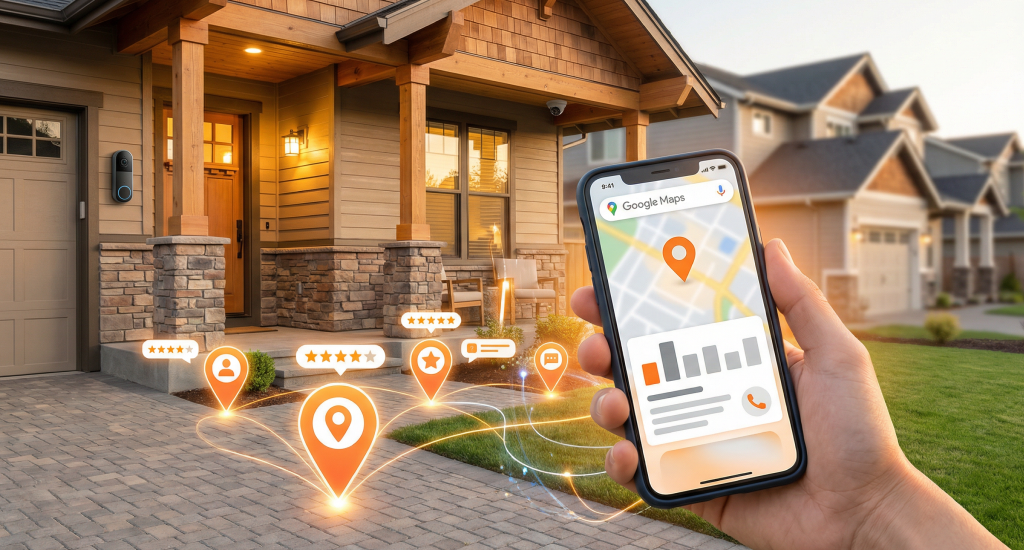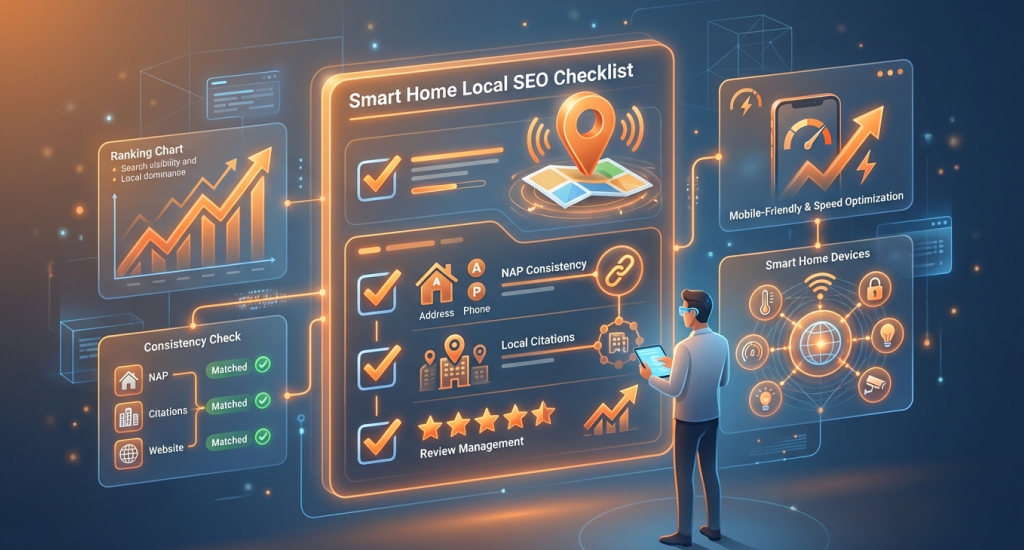
A local SEO checklist for a smart home business includes claiming and optimizing your Google Business Profile. That is ensuring NAP (Name, Address, Phone number) consistency across all local citations, and building local backlinks.
Additionally, you should create locally-focused content, optimize your website for mobile and speed, and manage online reviews to improve your visibility in local search results. Many smart home companies spend money on ads or build sleek websites, but still miss out on steady local leads by skipping local SEO for smart home businesses.
This interactive smart home business local SEO checklist can help you boost local visibility, reach the Local 3-Pack, and get more organic service calls. It helps grow your local business with easy actions you can follow.
15 Smart Home Business SEO Checklist for Ultimate Growth
You can use this smart home SEO checklist to see how ready your business is for local growth. Mark what you have completed and notice what is missing so you can improve visibility, attract nearby customers, and increase service calls. Check out the following key local SEO checklists below.
1. Google Business Profile Setup
A complete Google Business Profile helps your company appear in search results and on Google Maps. You must claim and verify your profile, add all business information, such as hours and services, and upload multiple photos of your work and office.
Regularly posting updates keeps your profile active. You should include the primary services you provide, such as lighting automation, intelligent security systems, energy management, and smart assistant integration. A well-maintained profile makes it easier for customers to contact you.
2. Local Citations & Consistent NAP
Citations are listings of your Name, Address, and Phone number (NAP) across online directories. Ensure your NAP is identical on Google Maps, your website, Yelp, Angi, HomeAdvisor, BBB, and Chamber of Commerce listings. Even slight differences in abbreviations or phone formats can confuse search engines and weaken local rankings.

Accurate citations strengthen local relevance and help verify your business’s legitimacy in Google’s eyes. When search engines see consistent business information across trusted platforms, they’re more likely to rank your business higher in local search and Google Maps results.
To manage this effectively, use citation-tracking tools such as BrightLocal or Semrush. These tools help you identify duplicate listings, monitor inconsistencies, and fix errors quickly, saving time while maintaining long-term NAP accuracy and local SEO stability.
3. Keyword & “Near Me” Optimization
Keywords help local customers find your services. Use terms people actually type when searching online for nearby smart home services.
Include phrases like:
- “home automation installation near me”
- “smart lighting setup in Austin”
- “best smart home company USA”
Use these keywords naturally in your homepage title, service pages, and Google Business Profile description so that you can rank on Google and local maps, and AI tools can refer you. You should avoid stuffing keywords. Tools like SEMrush Keyword Magic or Google Keyword Planner can help identify the correct phrases for your city and services.
4. Create Local Landing Pages
Local landing pages focus on individual cities or neighborhoods. Each page should clearly describe your services and location.
You should include the following on each page:
- Google Maps embed with accurate location
- Contact information, including phone number and email
- Service area headings and city-specific content
- Testimonials from local clients
Pages like these improve search visibility in specific locations. Also, they help potential customers feel confident that your business serves their area.
5. Collect and Respond to Reviews
Online reviews show trustworthiness. Ask satisfied customers to leave reviews on Google. You should respond professionally to each review to show you value feedback.
If you add review schema to your website, it will help search engines display reviews in search results. Regularly monitoring reviews improves your reputation and makes your business more likely to appear in local searches.
Also, if you get negative reviews, manage them effectively so they won’t harm your business.
6. Build Local Backlinks
Local backlinks increase credibility and signal to Google that your business is connected to the community.
Ways to get backlinks:
- Partner with local realtors, electricians, or home improvement businesses
- Feature your services on local blogs, news sites, or chambers of commerce
- You can sponsor events related to smart home technology or community initiatives
High-quality local backlinks strengthen your authority. Also, they can make your business more likely to rank higher in Google Maps and search results.
7. Optimize On-Page SEO for Location
On-page SEO on your website helps Google understand where you operate and what services you offer. You should use schema markup and location references throughout your site.
Major steps:
- Add LocalBusiness and Service schema markup
- Mention service areas and ZIP codes on the pages
- Add internal links between city-specific landing pages
Even short phrases like “Serving homeowners in Denver, Aurora, and Lakewood” make a difference. Proper on-page SEO improves your chances of appearing in the Local 3-Pack and reaching customers nearby.
8. Use Local Content to Educate and Convert
You should write blogs and guides that teach or inform local customers. Examples include “Top 5 Smart Home Trends in [City]” or “Best Smart Thermostats for Texas Homes.” Local content attracts searches and builds credibility.
Try linking these posts to your service pages to guide readers to contact you. Educational content increases trust and makes it more likely visitors will call for a consultation or installation.
9. Track Your Progress Monthly
Regularly check how your website and Google Business Profile perform. You can use Google Analytics to track traffic and conversions. Monitor GBP metrics like direction requests, phone calls, and messages.
Tracking performance helps identify what works and what needs improvement. Businesses that monitor results can adjust quickly and attract more local customers over time.
10. Mobile and Speed Optimization
Most local searches happen on mobile devices. You must ensure your website loads quickly and looks good on phones and tablets. Slow or poorly formatted websites cause visitors to leave before contacting you.
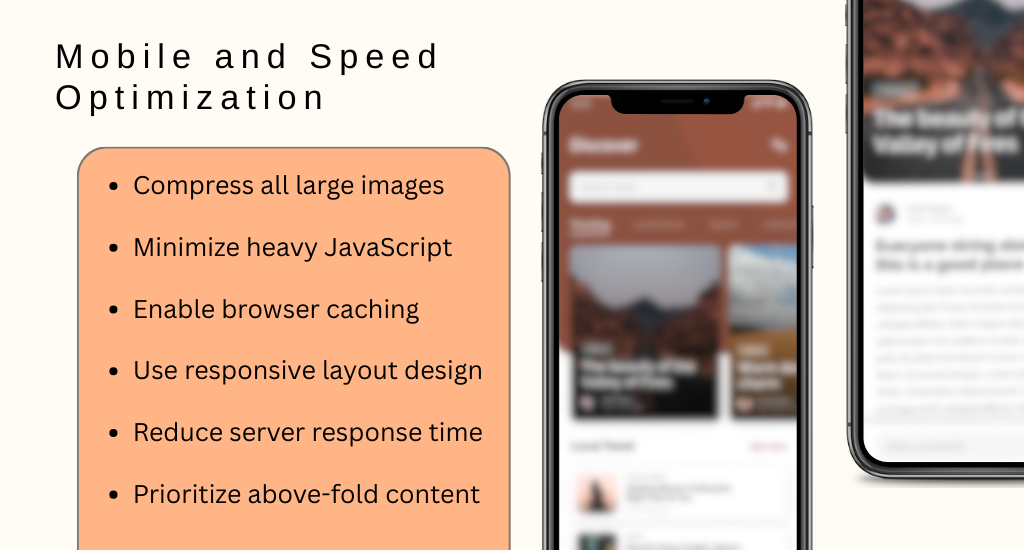
Compress images, use fast hosting, and test your website on multiple devices. A fast, mobile-friendly site improves the user experience and increases the chances of ranking higher in local search results.
11. Use Local Schema and Structured Data
Structured data helps search engines understand your business. You should add the LocalBusiness schema and service schemas with your address, phone number, hours, and service offerings.
It can improve your chances of appearing in rich snippets or the Local 3-Pack. As a result, it will give your business more visibility than your competitors.
12. Social Media Signals
Active social media profiles support local SEO. You can post updates, projects, and promotions on Facebook, Instagram, and LinkedIn. Also, link back to your website and local landing pages.
Consistent information across all profiles reinforces your NAP. Social engagement also drives traffic to your website and signals to Google that your business is active and trusted locally.
13. Monitor Competitors in Your Area
Check what nearby smart home companies are doing online. You should look at their keywords, backlinks, reviews, and local content.
Knowing competitor strategies helps you identify gaps and opportunities. You should improve your pages, content, and Google Business Profile based on what is working well for others in your area.
14. Encourage Local Partnerships and Community Presence
You should work with local businesses and participate in community events. Sponsor events, offer workshops, or collaborate with realtors, electricians, and other service providers.
These partnerships generate backlinks, increase exposure, and create opportunities for word-of-mouth referrals. Google notices community involvement, which can improve local search rankings and trust among nearby customers.
15. Focus on a Single City, Neighborhood, or Region
Local SEO works best when your efforts are geographically focused. Instead of targeting multiple locations at once, choose one primary city, neighborhood, or service area. This approach helps Google clearly understand where your business operates and improves relevance for local search queries.
Create location-specific content, landing pages, and keywords tailored to that area. Consistent local signals, such as city-based keywords, Google Business Profile optimization, and local backlinks, boost visibility and increase qualified local leads.
Why Local SEO Is the Missing Piece for Smart Home Growth
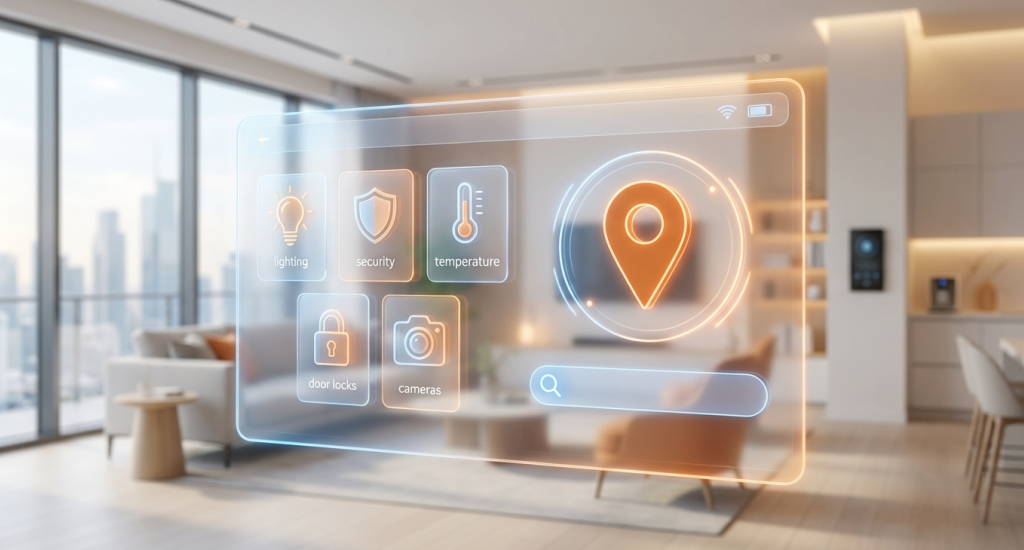
Smart home companies often invest in ads and websites, yet many miss local leads by ignoring smart home local SEO. Local SEO for home automation companies helps nearby potential customers find you easily. Also, it can boost calls and business growth.
Your Market Is Expanding, But Visibility Is Shrinking
The U.S. smart home market is booming. According to Statista, it will exceed $55 billion by 2026. Even small local installers now compete with large national brands.
Customers often search on Google Maps or type “near me” for services before making a choice. For example, when someone types ‘smart home installer near me,’ will your business show up before your competitor’s?
It really matters because visibility drives opportunities. According to BrightLocal, 87% of consumers use Google to evaluate local businesses before contacting them. If your company does not appear prominently, customers simply pick someone else nearby.
Local SEO for smart homes businesses ensures your business stays visible to these ready-to-buy customers.
Local SEO = Trust, Traffic, and Calls
Buying smart home products or services is a high-trust and high-ticket decision. Customers check reviews, maps, and listings before calling anyone. That’s where local SEO for home automation companies comes in.
Google shows the top three local results in the Local 3-Pack. Almost half of all searches, around 46%, have local intent. This intent means people are looking for nearby solutions. Businesses appearing in Google’s Local Pack see 500% more profile views than those below.
Local SEO builds trust, increases website traffic, and drives calls directly from customers who are ready to hire. Appearing in the Local Pack signals reliability, boosts credibility, and brings consistent leads.
Lead-gen tip: Want to know if you’re appearing in the Local Pack? Run a 60-second Local SEO visibility scan to see exactly how your smart home business performs and uncover gaps your competitors might be exploiting.
Smart Home Local SEO Checklist (Quick Reference)
Common Local SEO Mistakes That Stop Smart Home Businesses From Ranking
Most smart home and local service businesses lose rankings not because of competition, but because of avoidable mistakes. These errors weaken trust, reduce visibility, and prevent Google from confidently recommending your business to local customers.
Using Inconsistent Business Names Online
Many businesses list their name slightly differently across platforms, which confuses search engines. Even slight variations reduce trust signals. Also, it becomes harder for Google to confirm your business authority across multiple citations and directories.
Inconsistent naming also erodes customer trust when details are mismatched. Keeping the same business name everywhere ensures stronger local signals, improved visibility, and better alignment with Google’s verification process.
Ignoring Reviews or Replying Defensively
Not responding to reviews, especially negative ones, suggests poor customer care. Google values engagement, so silence lowers trust. Also, it can reduce the chance of appearing in the Local 3-Pack maps section.
Defensive or emotional responses can further damage your reputation. A calm and helpful reply shows reliability, improves consumer confidence, and signals professionalism. Also, it contributes to stronger local ranking performance and conversion rates.
Having Duplicate or Missing Local Pages
Duplicate location pages confuse search engines by splitting ranking signals across multiple URLs. Instead of building authority, Google struggles to identify the primary page. It causes lower rankings and diluted relevance.
Missing local pages weaken location targeting. Also, it leaves customers without area-specific information. Creating unique, optimized landing pages for each service area improves clarity, relevance, and overall discoverability in local search results.
Over-optimized Content (Keyword Stuffing)
Stuffing keywords into service pages reduces readability and makes your content appear unnatural. Google penalizes this practice by lowering trust and ranking potential, and by flagging your website as low-quality.
Natural, helpful, and localized content performs better because it matches real user intent. Balanced keyword use helps Google understand your services. Also, it helps to keep the user experience smooth, informative, and conversion-focused.
Neglecting Mobile Speed
Slow mobile loading pushes customers away before they even see your services. Google prioritizes fast websites because they provide a better experience, especially for users searching on the go.
Poor speed also increases bounce rates, which signals low engagement and hurts rankings. Optimizing mobile responsiveness, image compression, and hosting performance helps maintain strong visibility in local search results.
Not Using Proper Local Schema Markup
Without structured data, Google struggles to understand your business details quickly. Missing schema reduces eligibility for rich results. Also, this condition can weaken the clarity of your local relevance.
Proper schema markup highlights essential information like address, phone number, hours, and services. It improves visibility, boosts accuracy, and builds up your credibility within local search ecosystems.
Failing to Maintain Accurate Directory Listings
Old or outdated listings on directories create conflicting information. This inconsistency sends negative trust signals, weakening your ability to rank in competitive local markets.
Regular audits ensure that your address, phone, services, and hours stay accurate everywhere. This consistency supports Google’s verification process and increases your chances of appearing in high-value local positions.
Final Verdict
Ranking a smart home business is challenging because the industry is highly competitive, and customers often rely on local searches before contacting a service provider. Keeping up with Google’s rules, reviews, and technical tasks usually feels too heavy to manage on your own.
A reliable agency can simplify this by handling citations, content, speed fixes, and map rankings. This support helps you stay visible to homeowners searching for installers in your area.
Growth for Local helps smart home companies gain steady visibility, more calls, and stronger trust through focused Local SEO and Google Ads support. So, let us guide your growth.